Toll Free






Assembling
Adhesive bonding (gluing) is the most common method of attaching Fluxtrol concentrators to an induction heating coil. The user must clearly understand the goals of bonding: whether it’s only to keep the controller on the coil or also to provide its intensive cooling by means of heat transfer to the water-cooled coil turns.
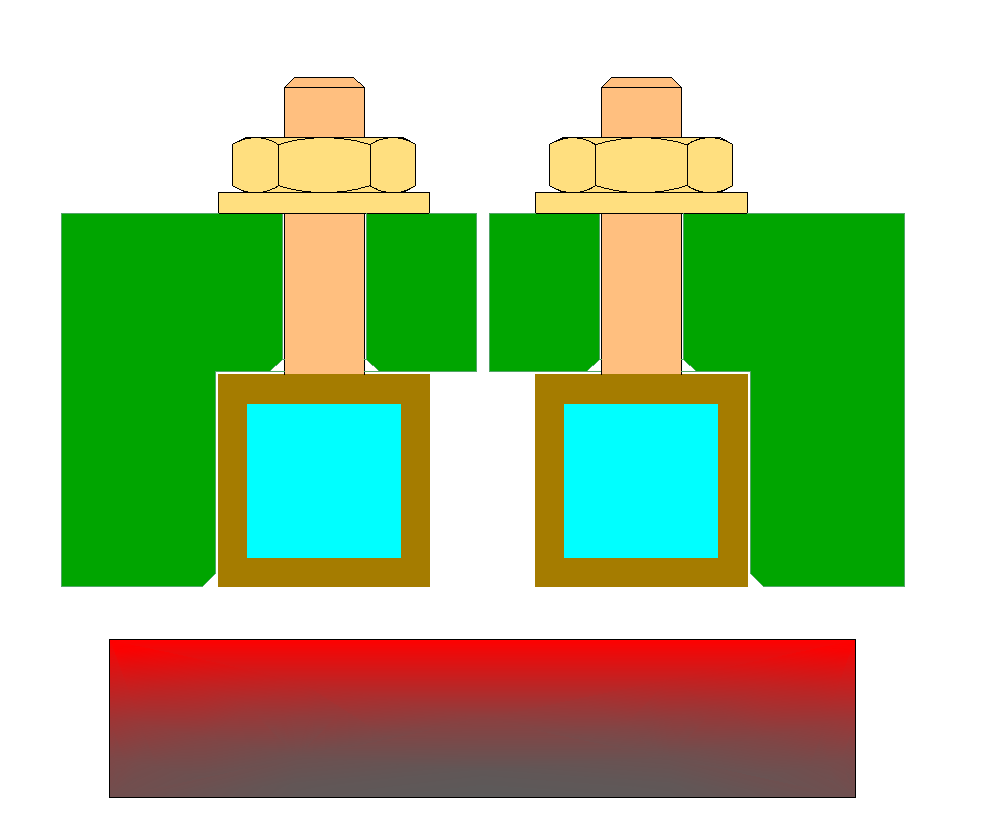
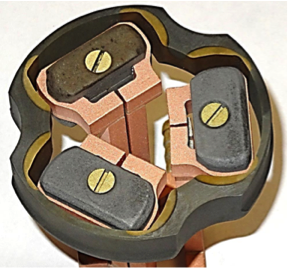
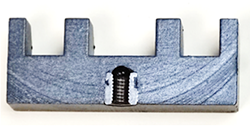
Mechanical connection is the most accurate and reliable method of attachment of controllers to induction heating coils. It can withstand thermal movements and vibration of the coil components during service.
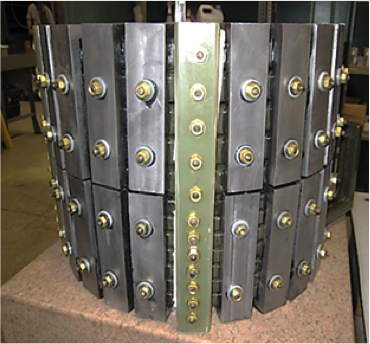
There are many cases when Fluxtrol controllers may be attached not to the coil turns, but to structural components of induction installations such as chamber walls, frames of magnetic shields, etc.
Contents
Adhesive bonding (gluing) is the most common method of attaching Fluxtrol concentrators to an induction heating coil. The user must clearly understand the goals of bonding: whether it’s only to keep the controller on the coil or also to provide its intensive cooling by means of heat transfer to the water-cooled coil turns.
The second case is especially important for heavy loaded coils and long heating cycle such as in scanning applications. This case is more demanding and will be mainly described further. Different adhesives may be used for attachment with epoxy resins being the most commonly used glues.
Adhesive must have the following characteristics:
- High adhesion strength
- Good thermal conductivity
- High temperature resistance when the joint area is expected to be hot. Keep in mind that in high power applications some zones of the copper surface can reach 200 C or even more in spite of intensive water cooling of the coil.
If intensive cooling of the concentrator isn’t required, many other glues may be used: epoxies, silicone Adhesive or others. Silicone rubber is a very poor thermal conductor and it can be use only for lightly loaded inductor coils or when the magnetic controller has alternative cooling such as by quenching media after a short heating time.
Adhesive Selection
| Adhesive | Thermal Conductivity W/cmK | Max Service Temperature | Thermal Loading (Recommended) | Gap, mm |
|---|---|---|---|---|
| Epoxy 50-3100* | 0.022 | 205/400 | Heavy | 0.1-0.15 |
| Duralco 4525* | 0.02 | 260/500 | Heavy | 0.1-0.15 |
| Epoxy J-B Weld* | 0.01 | 230/450 | Common | 0.2-0.3 |
| Common Use Epoxies | <0.002 | >120/250 | Low | 0.2-0.3 |
|
Silicone TRV SE9184 Dow Corning |
0.0084 | 260/500 | Medium/Low | 0.25-0.5 |
| Common Use Silicones | <0.002 | <260/500 | Low | 0.25-0.5 |
* Epoxy 50-3100, Duralco 4525, J-B Weld and TRV SE9184 are thermally conductive adhesives
Notes:
- Epoxy and silicone adhesives have good resistance to water, quenchants and chemical resistance.
- All adhesives with high thermal conductivity are filled with ceramic or metal powder. Select metal-filled materials if you expect cutting or machining of glued material.
- If epoxies with good thermal conductivity aren’t available, it is possible to use common two or single part epoxies filled with metallic (aluminum, copper or iron) powder. Resulting glue must be thin enough for applying a thin layer of glue to the copper and Fluxtrol surfaces.
Gluing Technique

Application of epoxy by brushing
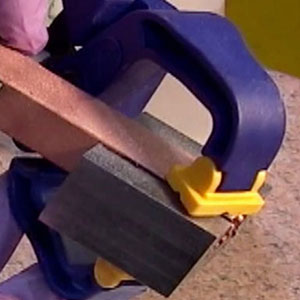
Joint clamping for epoxy curing
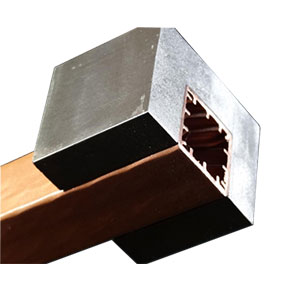
Joint clamping for epoxy curing
Recommended gluing procedure:
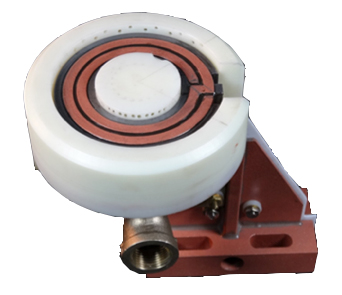
Two-turn pancake coil with concentrator glued with epoxy
- Clean all dirt, oils and greases using acetone or similar solvents
- Roughen the contact surfaces with course abrasive paper or file
- Apply thin layer of epoxy to both contact surfaces
- Assemble joint paying attention on complete filling the gaps with a glue
- Wipe away the excess glue with a dry or wet with acetone cloth
- Mechanically fix the joint components by clamping or wrapping
- Follow the curing instructions for the adhesive. Pay attention that there will be no glue spilling from the seam during curing. Spilling can result in forming air pockets and reduced heat transfer.