Toll Free






Magnetic Flux Controllers in Induction Heating
Induction heating is a contactless method, based on heating the bodies by means of energy absorption from the alternating magnetic field, generated by an induction heating coil lc (see Diagram A). There are two mechanisms of energy absorption: eddy current losses and hysteresis losses. Eddy currents Iw (see Diagram A) are being “induced” in conductive materials by a magnetic field that penetrates into the bodies. Eddy currents flow in closed loops inside the bodies and heat them due to the electrical resistance of their material.

Hysteresis is the lagging of the magnetization of a ferromagnetic material, such as iron, behind variations of the magnetizing field. When ferromagnetic materials are placed within a coil of wire carrying an electric current, the magnetizing field, or magnetic field strength H, caused by the current forces some or all of the atomic magnets in the material to align with the field. The net effect of this alignment is to increase the total magnetic field, or magnetic flux density B. The aligning process does not occur simultaneously or in step with the magnetizing field but lags behind it. (Britannica)
Hysteresis heating occurs only in magnetic materials. Hysteresis heating is caused by the internal “friction” of magnetic micro volumes (domains), which rotate following the orientation of the external magnetic field.

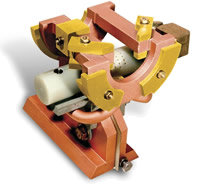
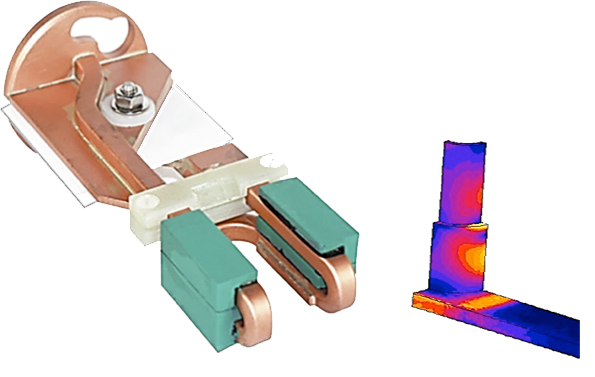
In solid materials, hysteresis losses are much lower than eddy current losses and often neglected in calculations. In particulate materials, they are a major or even only source of heating. In both cases, heat intensity is approximately proportional to magnetic flux value Φ squared. According to the laws of physics, magnetic flux flows along the closed path around the coil turns. Magnetic materials provide an easier way for magnetic flux to flow than air. By placing magnetic controllers in specific areas we can control the value and distribution of the magnetic flux density B. Depending upon its function (effects), a controller may be called a concentrator, diverter, shield, core, or impeder (in welding).
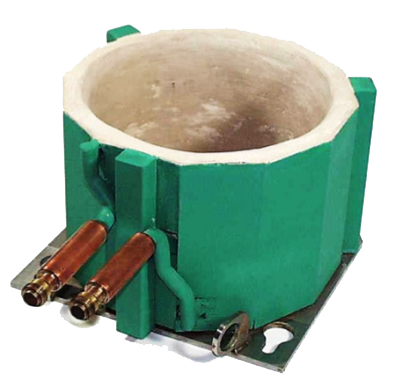
On many occasions, the controller can play several roles, such as concentrating field in one area and reducing in another. Due to a favorable combination of magnetic, thermal, electrical, and mechanical properties, Fluxtrol composites are excellent materials for different types of magnetic controllers.


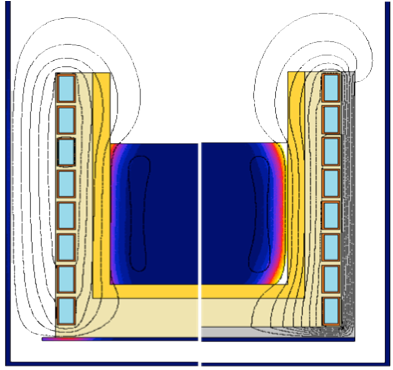
Application of C-shaped concentrators surges magnetic flux produced by the coil current and increases power generated in the part. In addition, the concentrator makes power distribution under the coil “face” narrower and closer to a rectangular shape. This results in better utilization of induced power.
Power distribution along the part surface, magnetic field lines concentration and power density color maps for a coil with and without concentrator.



Latest News


14
Aug
Fluxtrol Co-Sponsors IFHTSE 2026 Student Poster Award + Connect with our team in Padova


Read More

12
Jul
Off-Line Computational & Physical Testing of SMC Impeder Cores and Upcoming Events
Read More
12
Jun
The Industry Standard for Magnetic Flux Control
Read More

12
May
Fluxtrol on the Ground in Düsseldorf for Tube 2026
Read More

12
Mar
Sponsoring Student Innovation: Fluxtrol at Heat Treat Mexico 2026
Read More
01
Feb
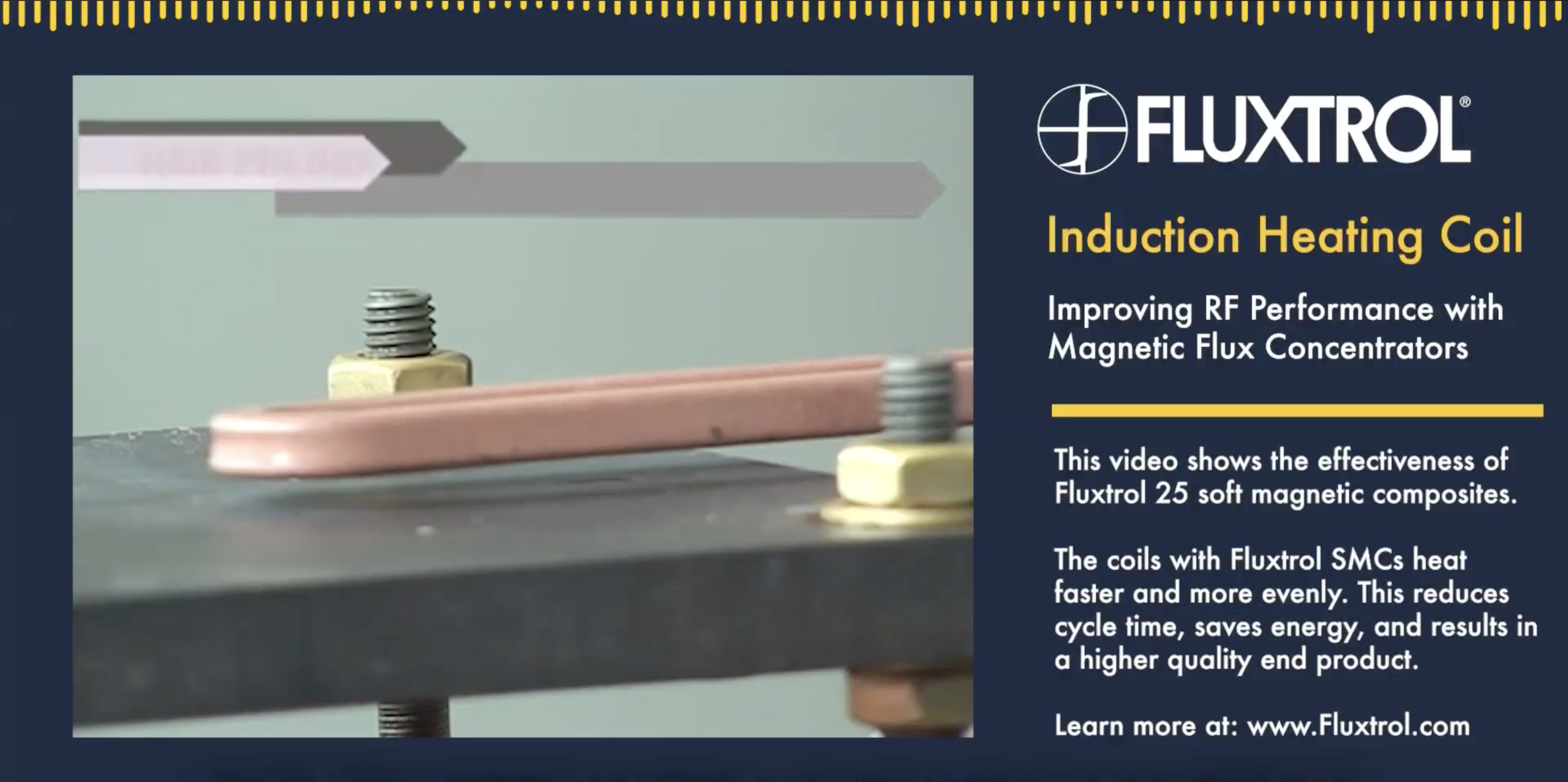
Video Demonstration: See the Difference on 5 Inductor Geometries with and without Fluxtrol 25
Read More

