Toll Free









Information
Authors:
Robert C. Goldstein1, D. Scott Mackenzie2
1 - Fluxtrol, Inc. Auburn Hills, USA
2-Quaker Houghton, Conshohocken, PA
Spray Quenching
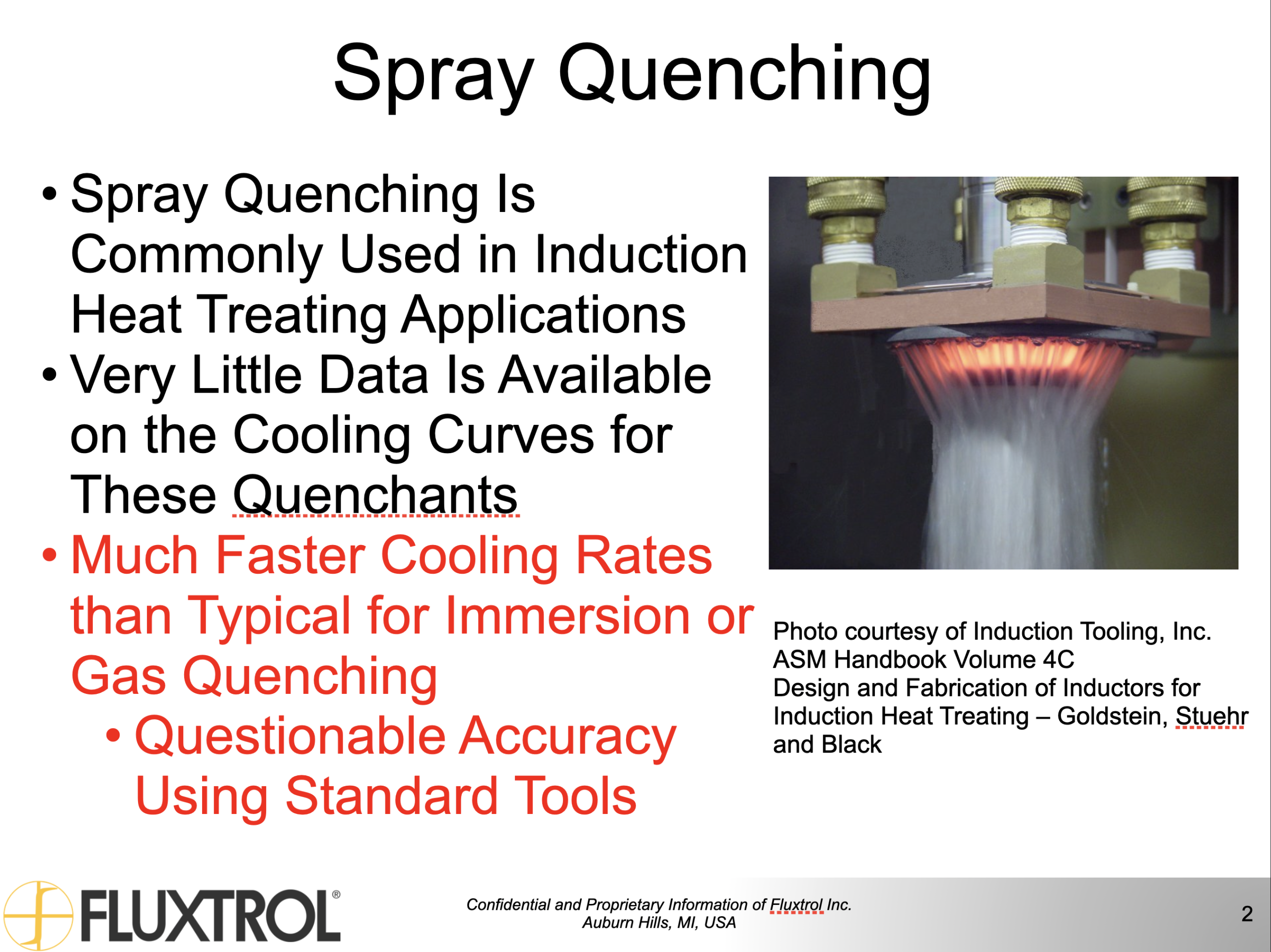
- Spray Quenching Is Commonly Used in Induction Heat Treating Applications
- Very Little Data Is Available on the Cooling Curves for These Quenchants
- Much Faster Cooling Rates than Typical for Immersion or Gas Quenching
- Questionable Accuracy Using Standard Tools

Photo courtesy of Induction Tooling, Inc.
ASM Handbook Volume 4C
Design and Fabrication of Inductors for Induction Heat Treating – Goldstein, Stuehr and Black
Means of Quenchant Control/Monitoring in Practice
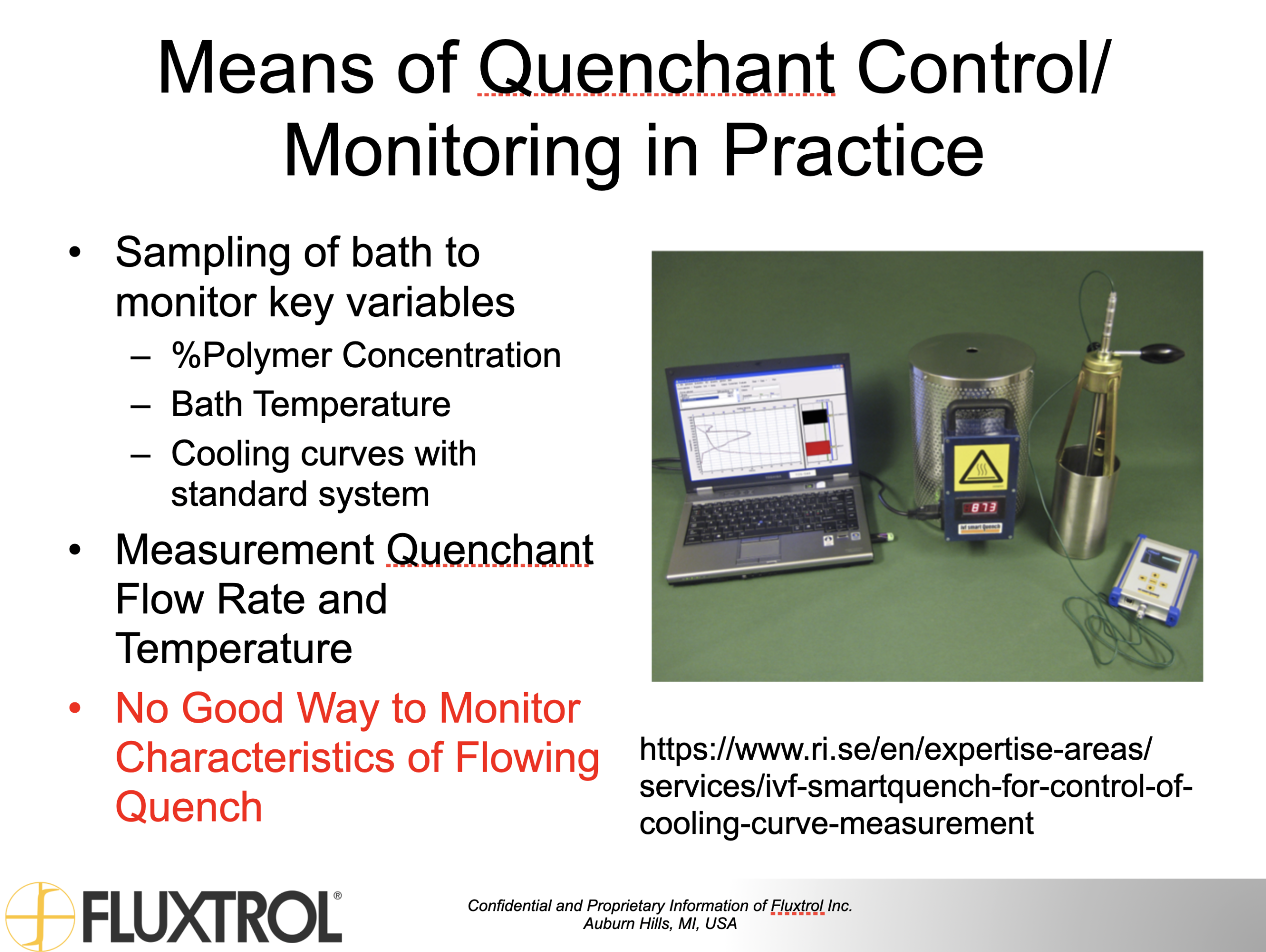
- Sampling of bath to monitor key variables
- %Polymer Concentration
- Bath Temperature
- Cooling curves with standard system
- Measurement Quenchant Flow Rate and Temperature
- No Good Way to Monitor Characteristics of Flowing Quench

https://www.ri.se/en/expertise-areas/services/ivf-smartquench-for-control-of-cooling-curve-measurement
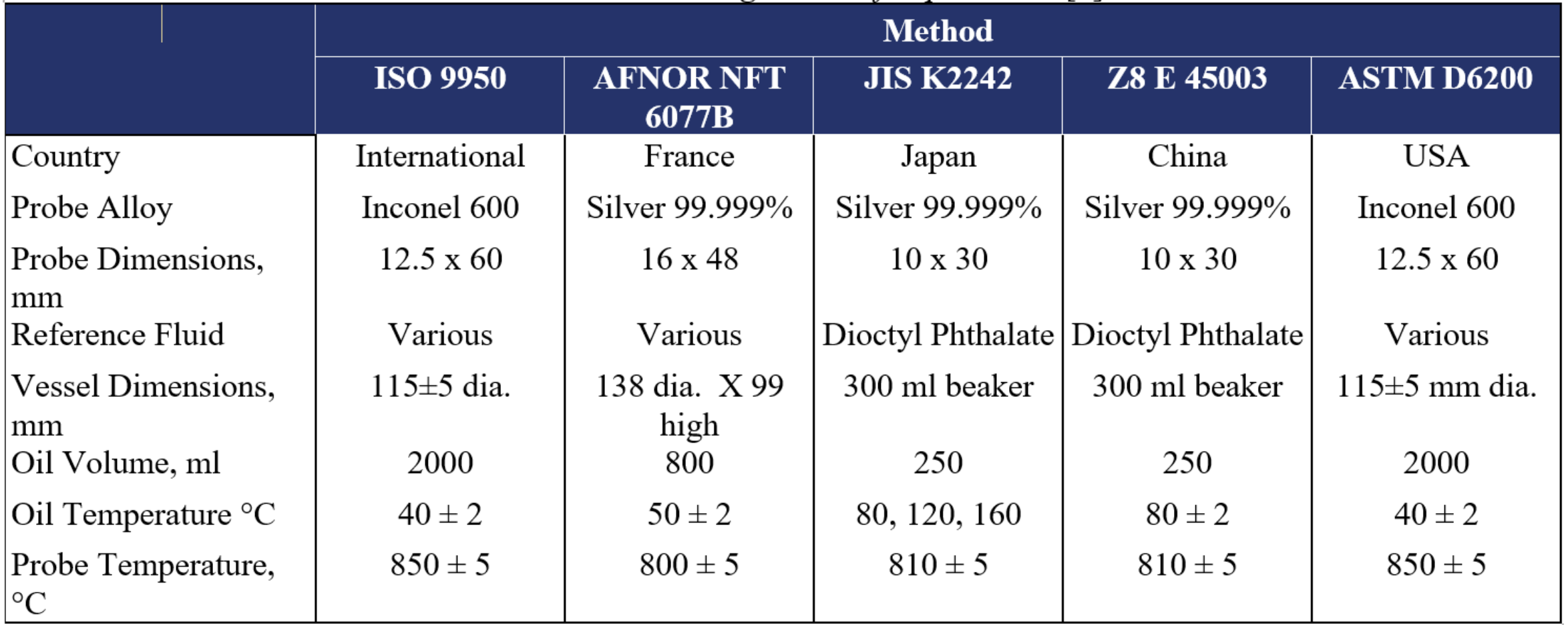
- Silver and Inconel 600 are the two main materials listed
- Size varies from 10 mm to 16 mm in diameter
- Volume of fluid and reference sample varies as well
Importance of Accurate Measurement of Cooling Rate
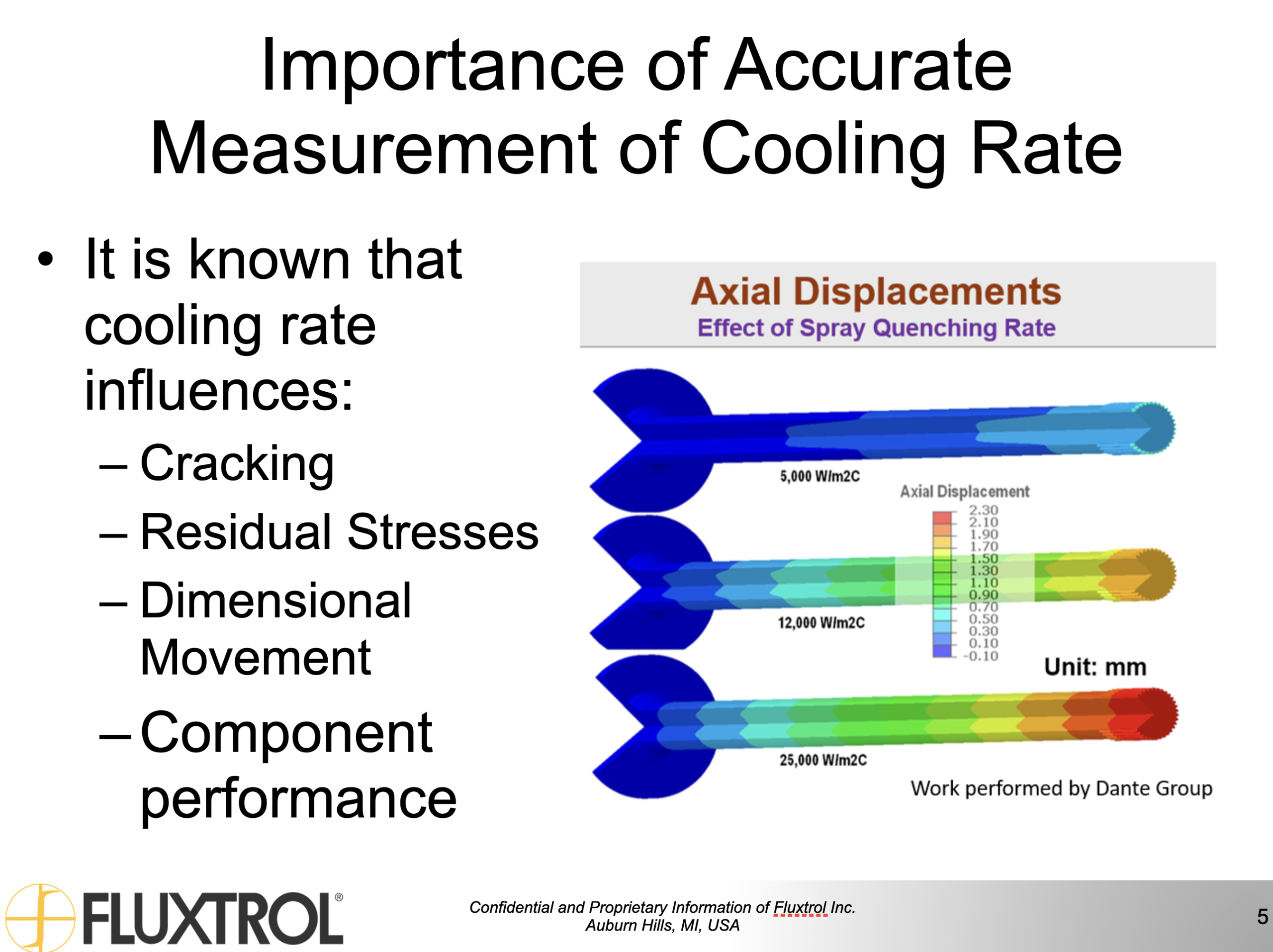
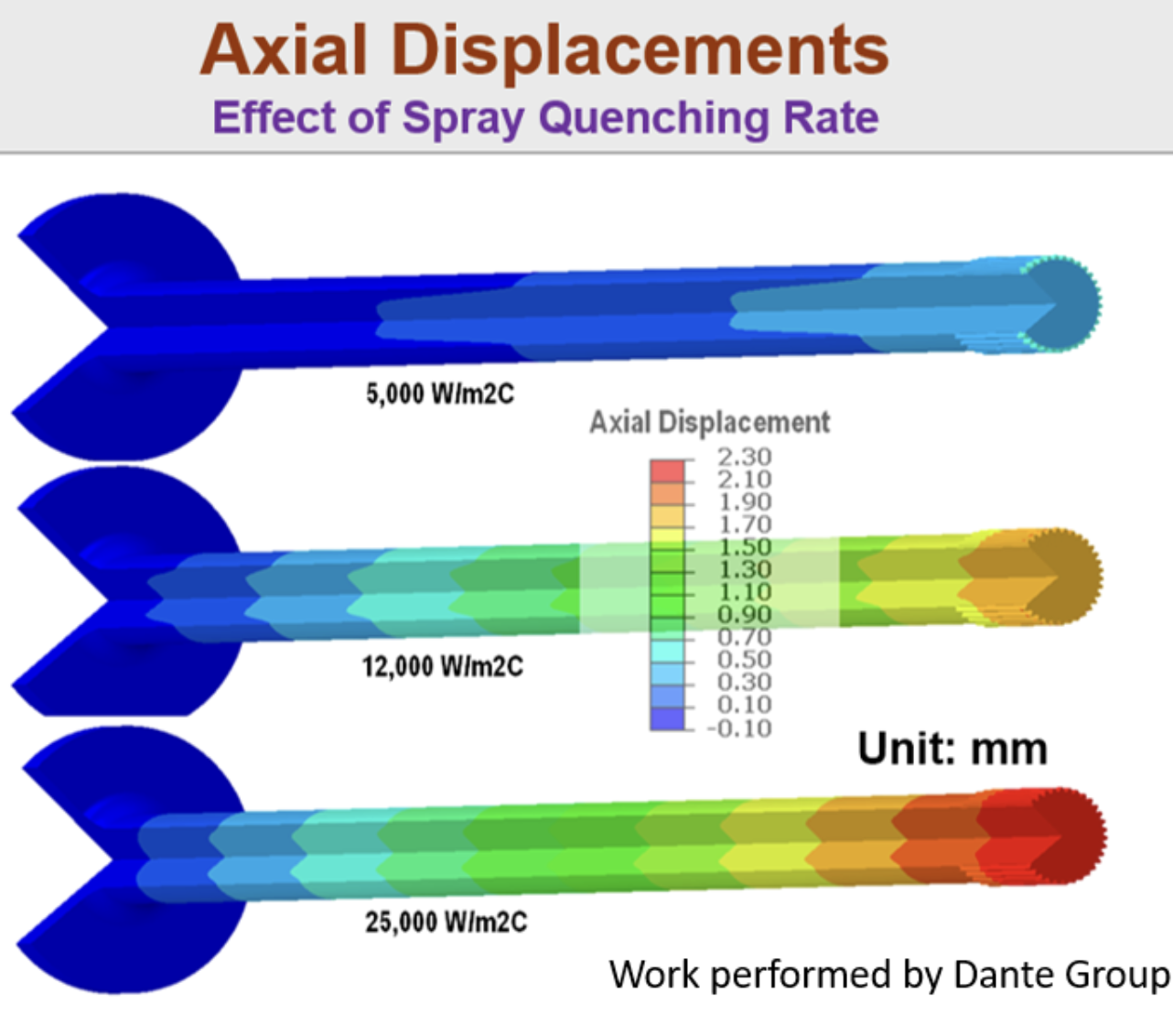
- It is known that cooling rate influences:
- Cracking
- Residual Stresses
- Dimensional Movement
- Component performance
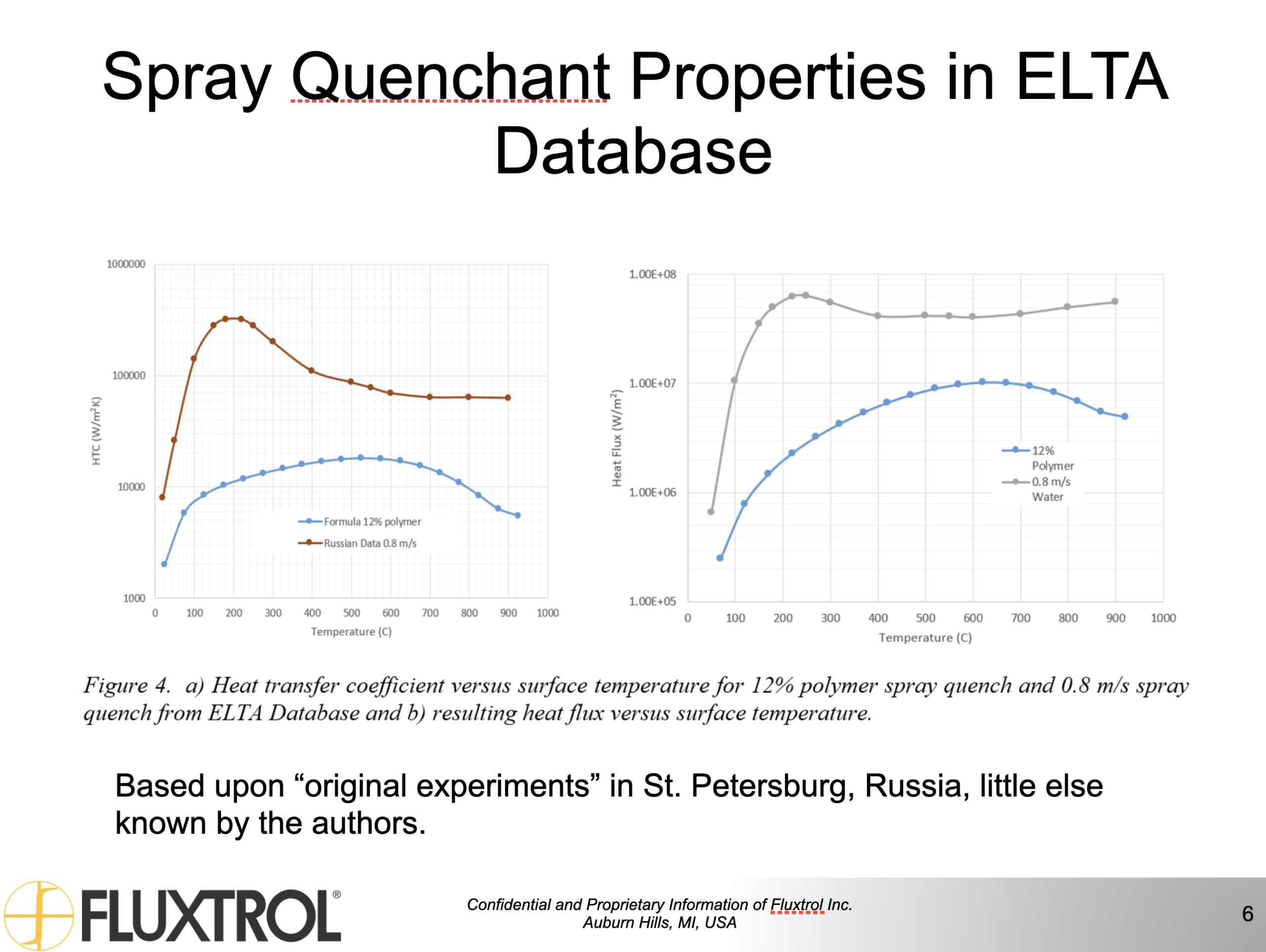
Spray Quenchant Properties in ELTA Database
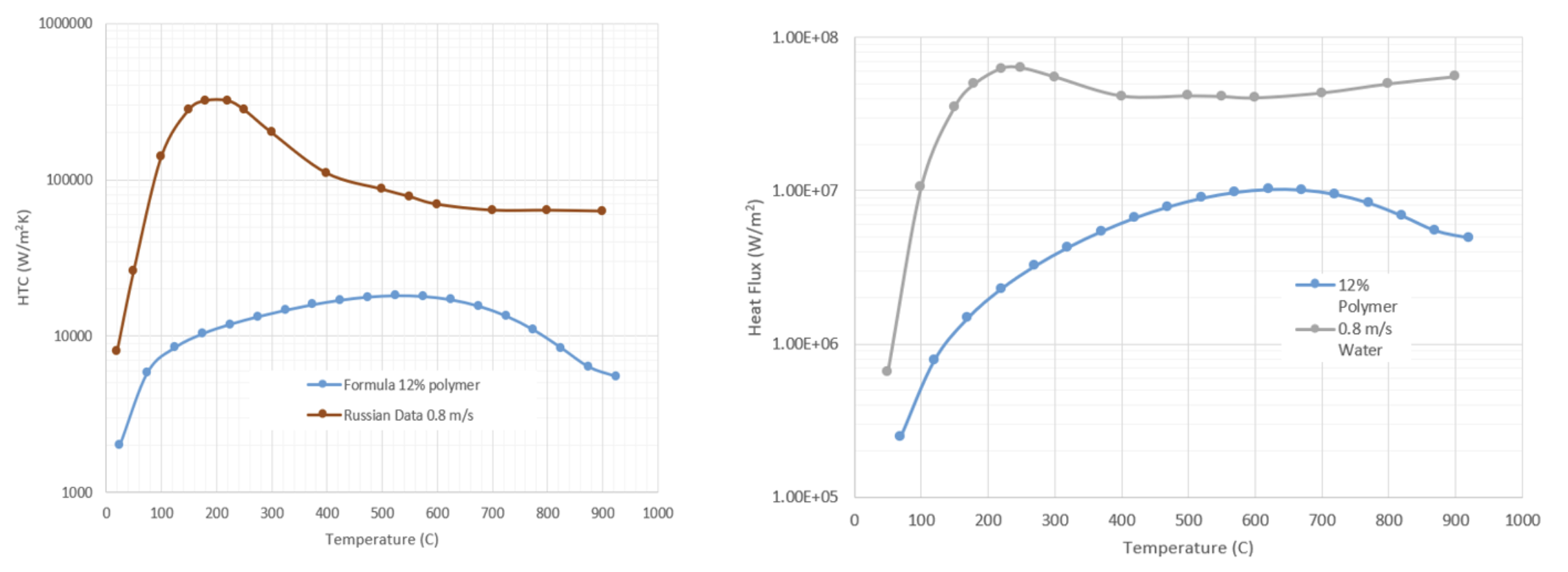 Figure 4. a) Heat transfer coefficient versus surface temperature for 12% polymer spray quench and 0.8 m/s spray quench from ELTA Database and b) resulting heat flux versus surface temperature
Based upon “original experiments” in St. Petersburg, Russia, little else known by the authors.
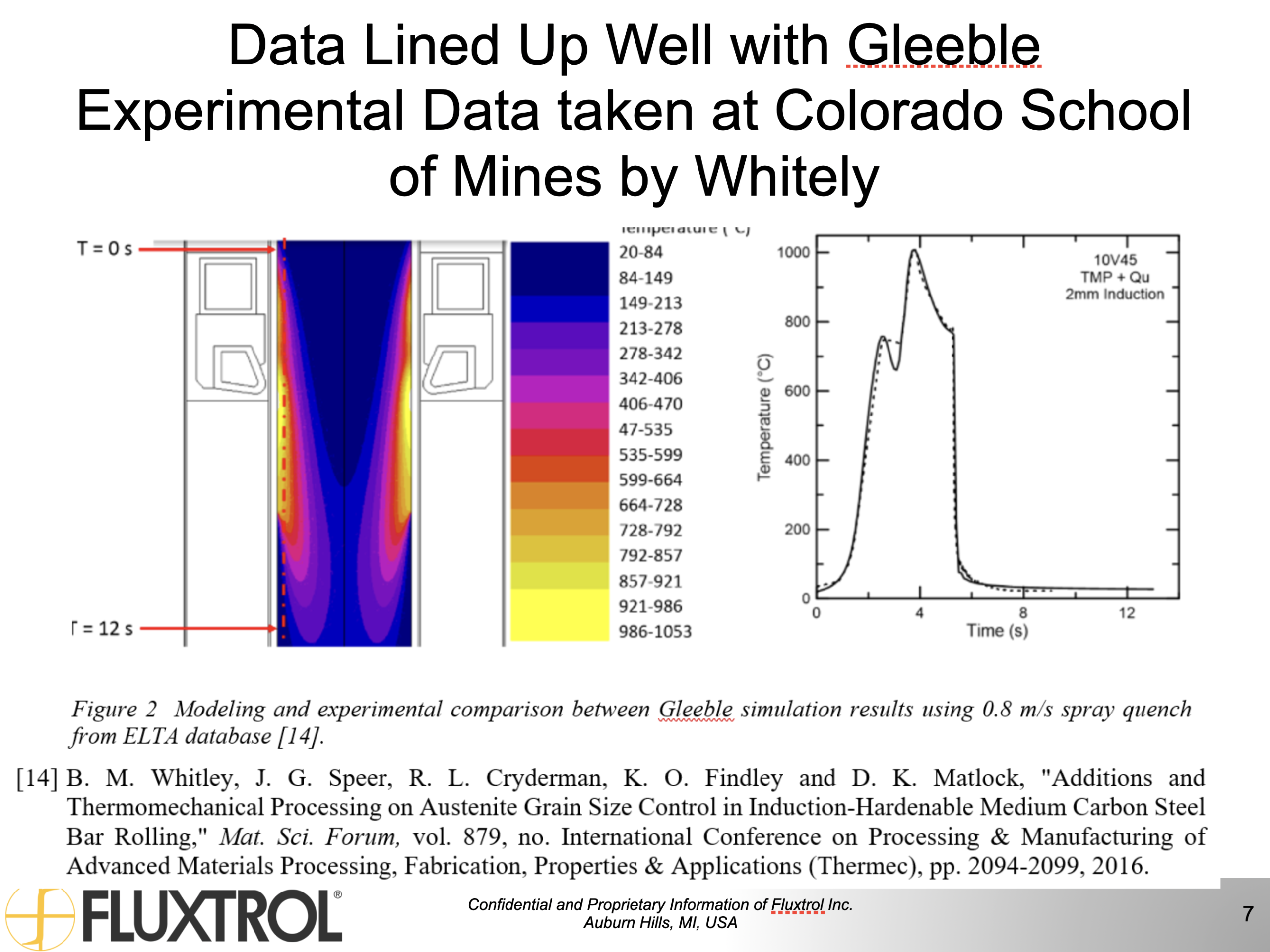
Data Lined Up Well with Gleeble Experimental Data taken at Colorado School of Mines by Whitely
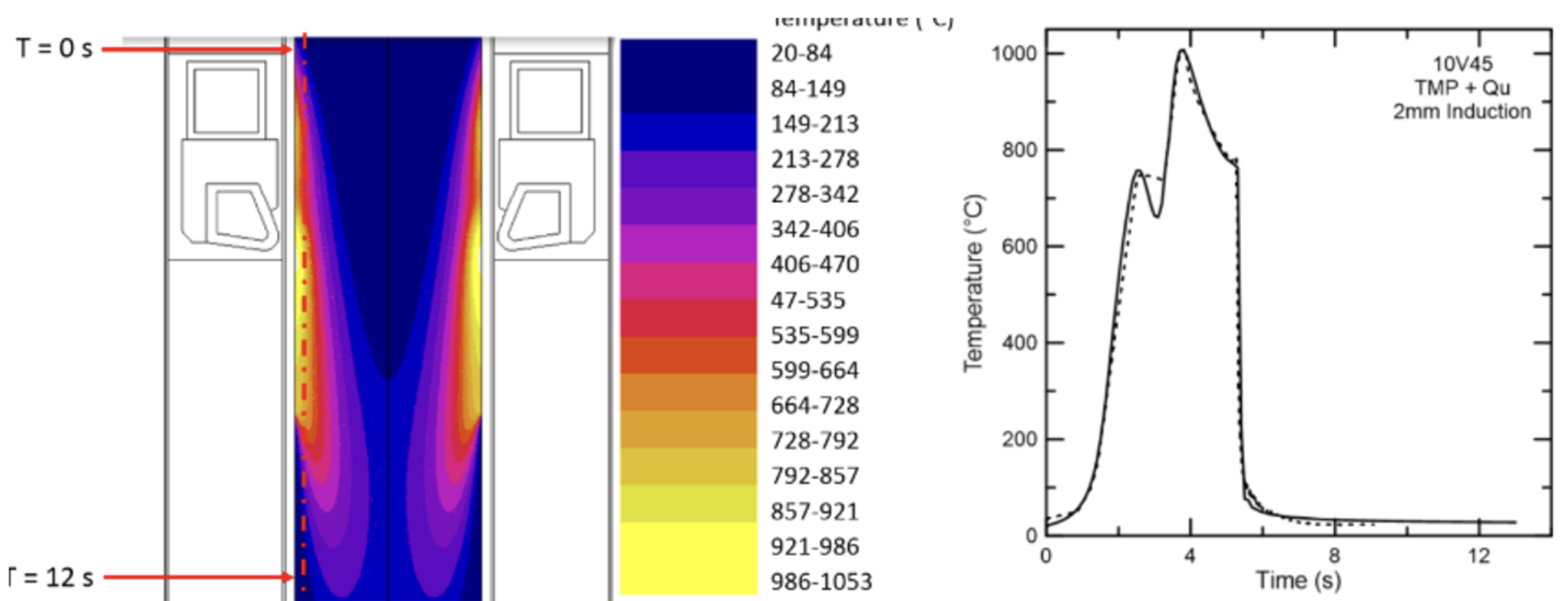

Quenchant Study Overview
- All calculations done virtually using ELTA
- 2 quenchants studied from ELTA database
- 12% Polymer Spray Quenchant
- 0.8 m/s Water Spray Quenchant
- Inconel and Silver Probes Considered with Central Temperature Measurement
- Diameters 1.5, 3, 6 and 12.5 mm (standard Inconel 600 geometry used)
- Temperature Data Plotted every 1 ms for first 0.5 s of cooling
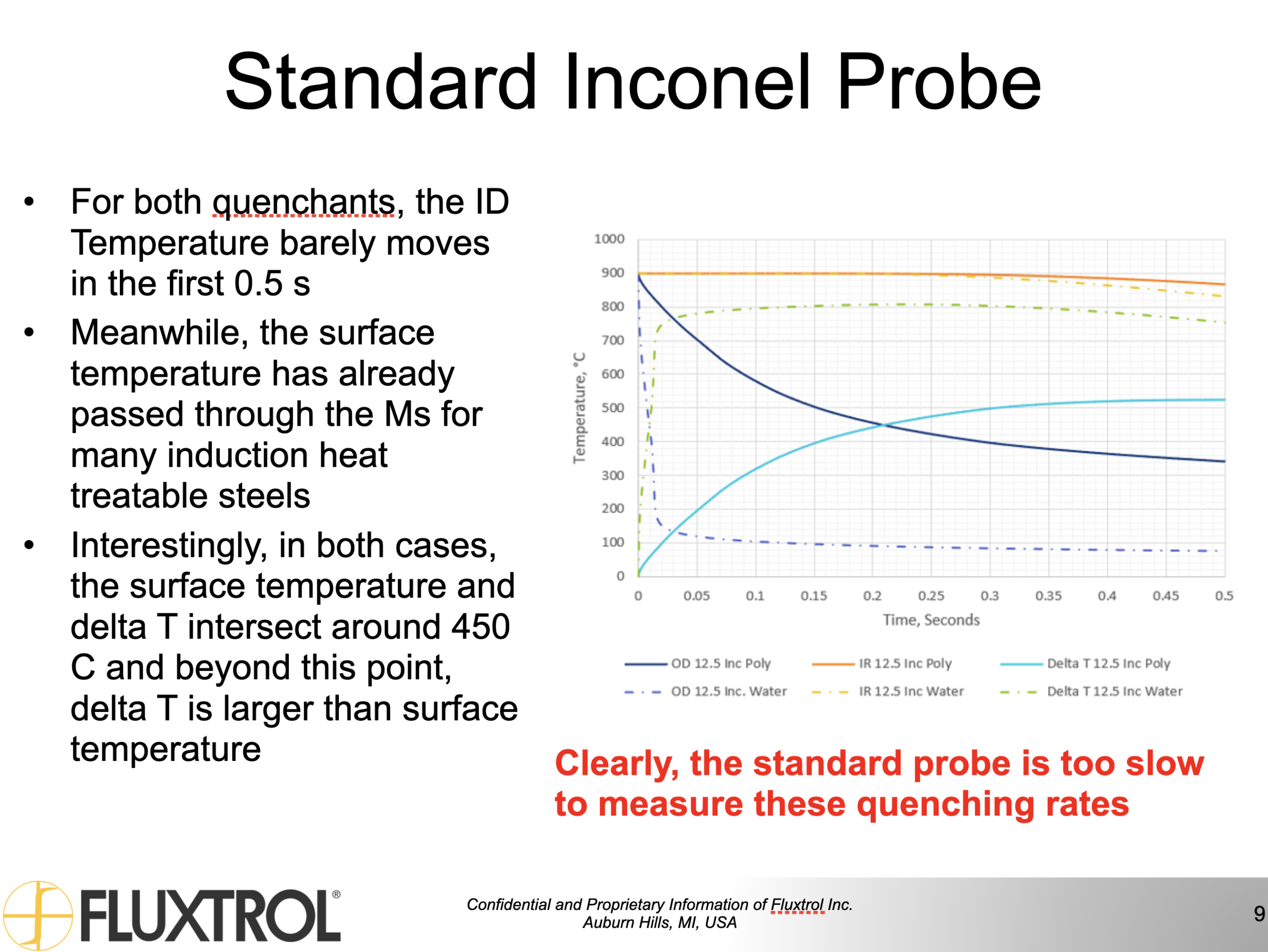
Standard Inconel Probe
- For both quenchants, the ID Temperature barely moves in the first 0.5 s
- Meanwhile, the surface temperature has already passed through the Ms for many induction heat treatable steels
- Interestingly, in both cases, the surface temperature and delta T intersect around 450 C and beyond this point, delta T is larger than surface temperature
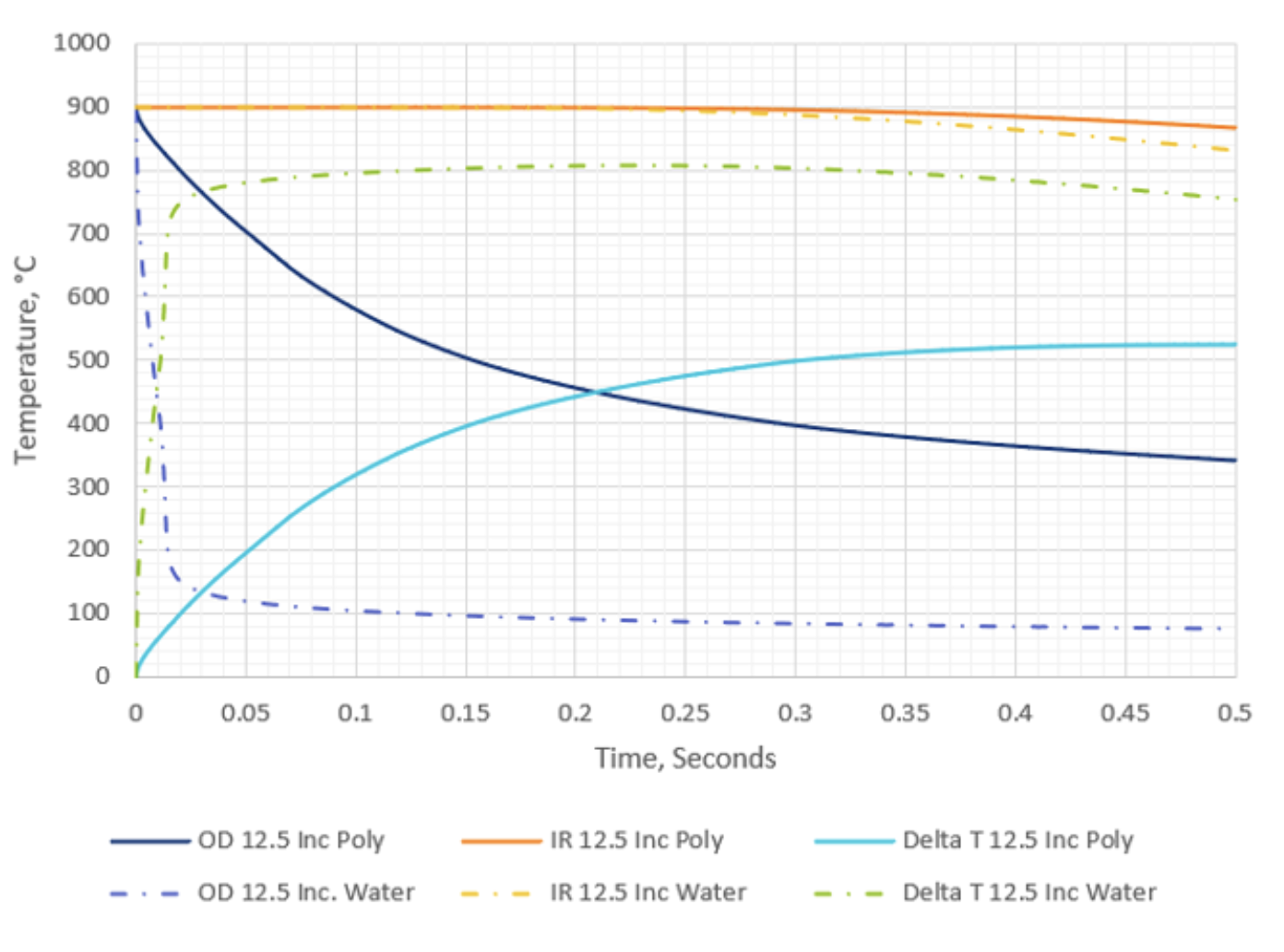
Clearly, the standard probe is too slow to measure these quenching rates
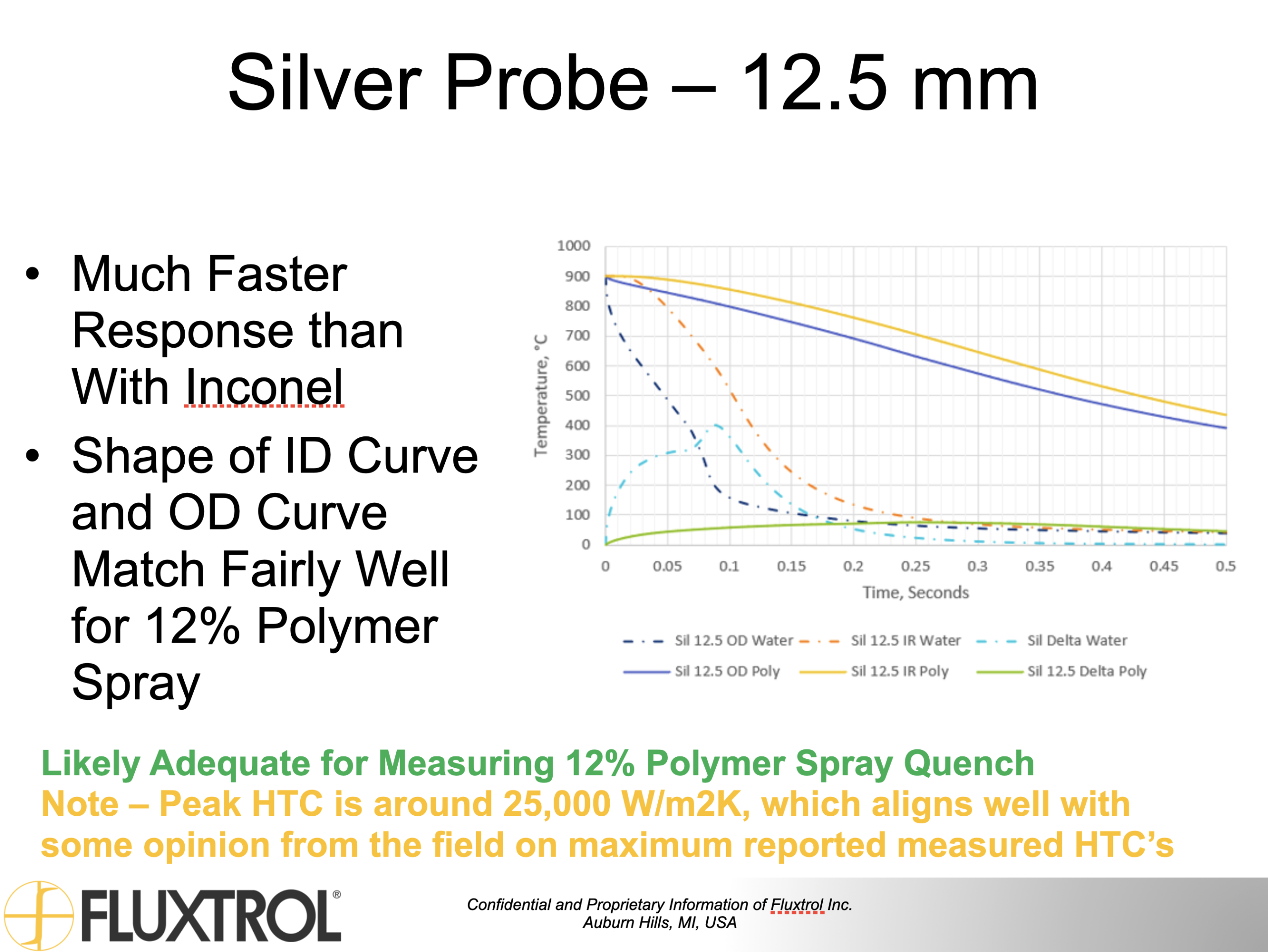
Silver Probe – 12.5 mm
- Much Faster Response than With Inconel
- Shape of ID Curve and OD Curve Match Fairly Well for 12% Polymer Spray
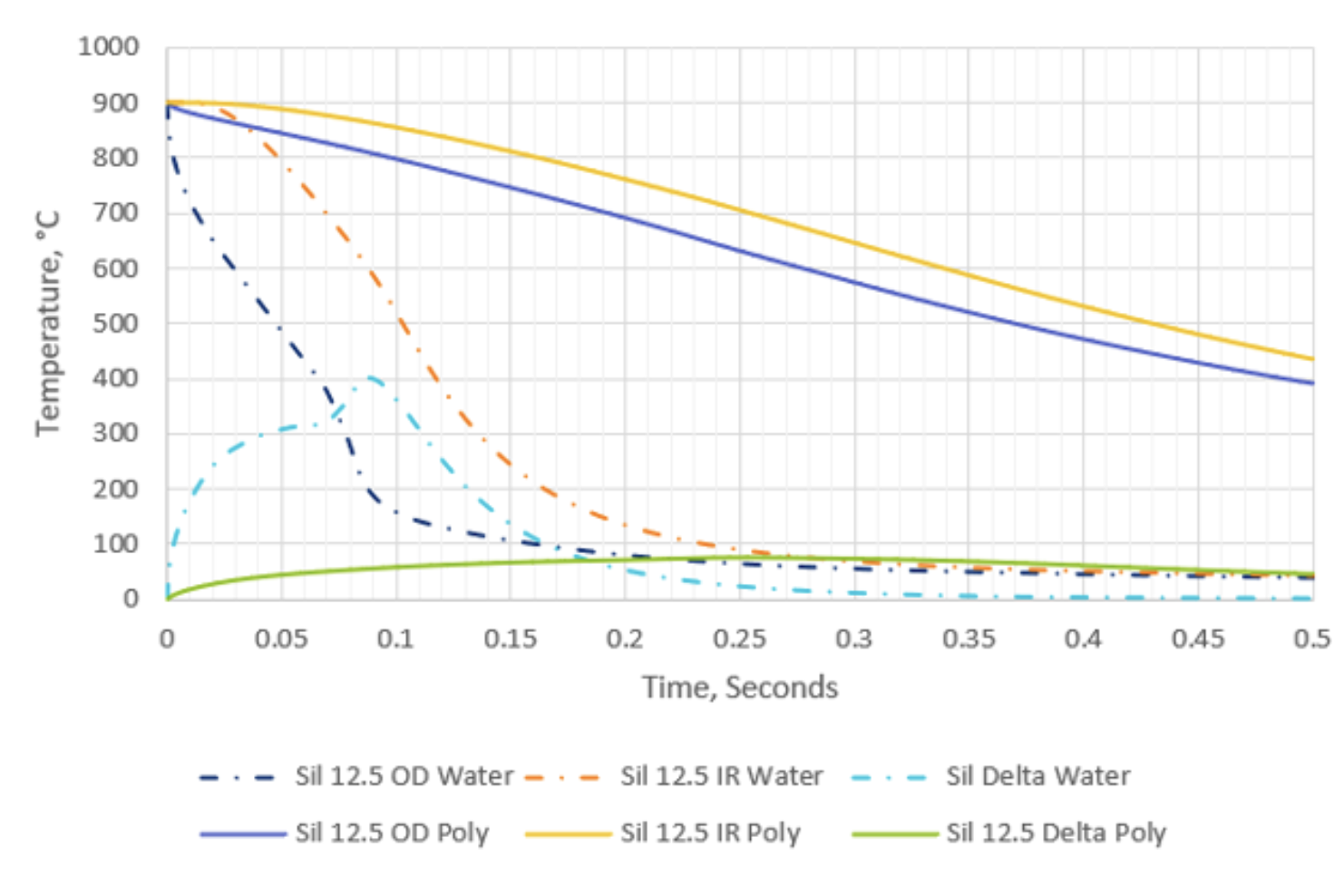
Likely Adequate for Measuring 12% Polymer Spray Quench
Note – Peak HTC is around 25,000 W/m2K, which aligns well with some opinion from the field on maximum reported measured HTC’s
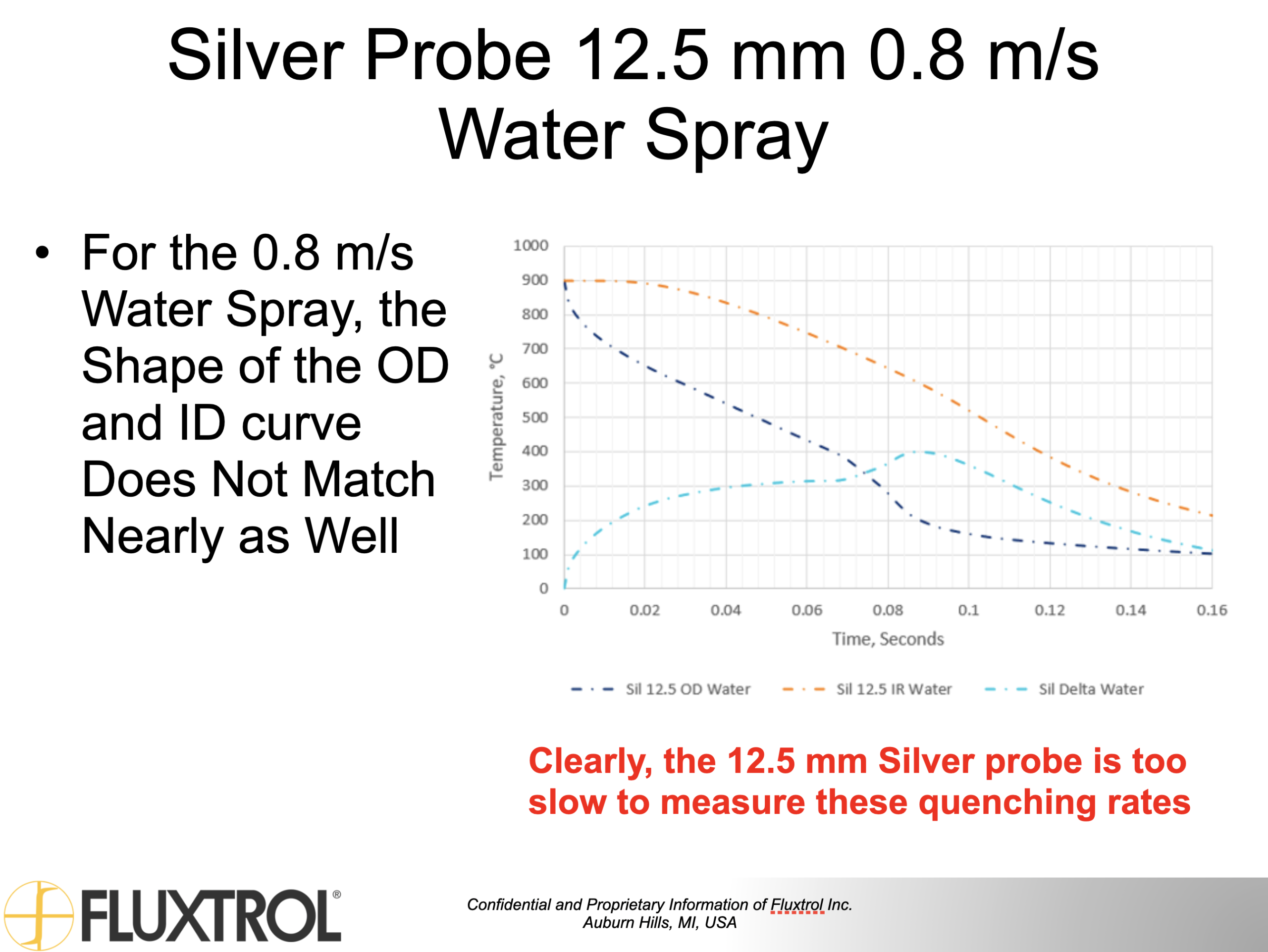
Silver Probe 12.5 mm 0.8 m/s Water Spray
- For the 0.8 m/s Water Spray, the Shape of the OD and ID curve Does Not Match Nearly as Well
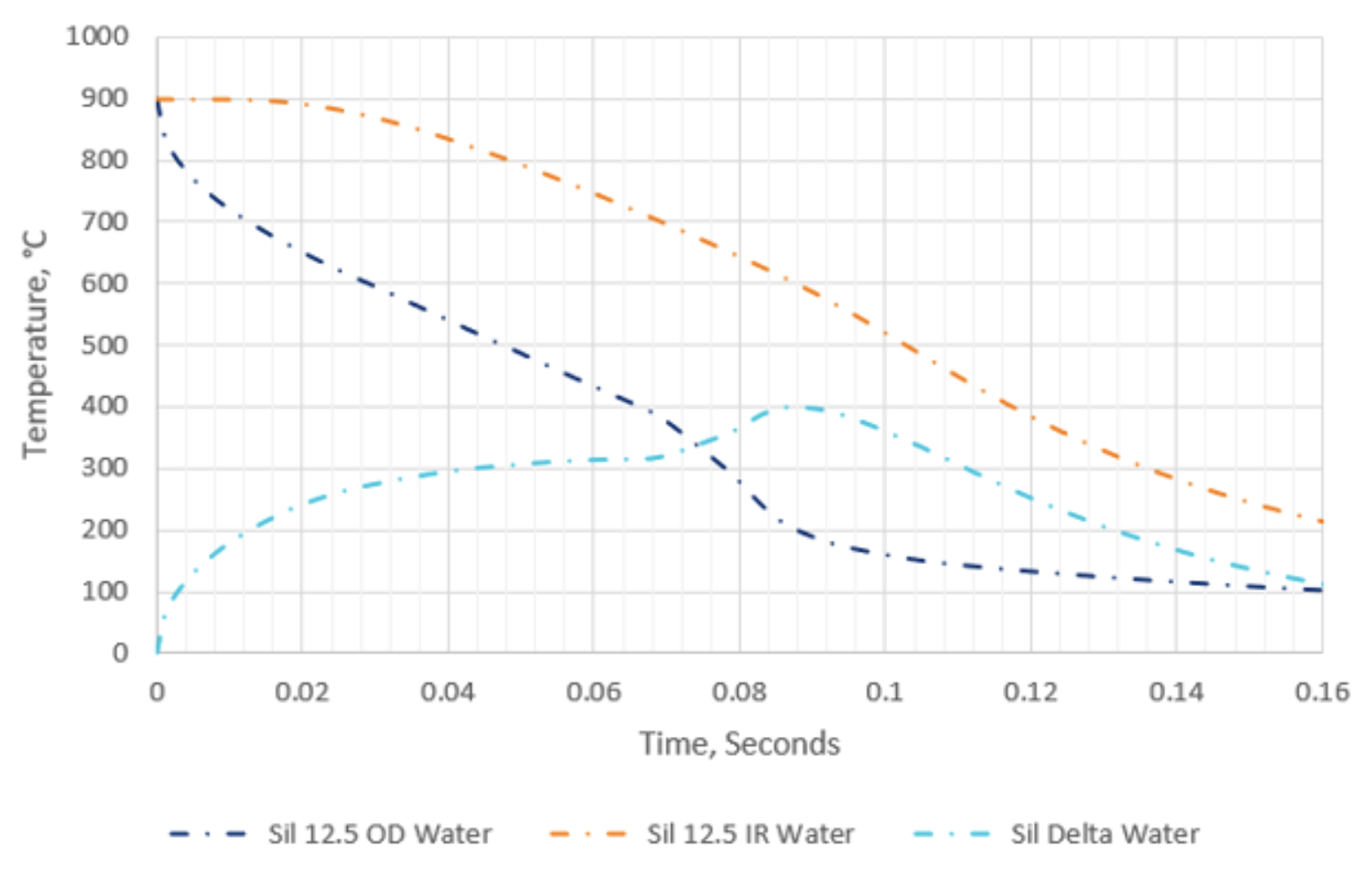
Clearly, the 12.5 mm Silver probe is too slow to measure these quenching rates
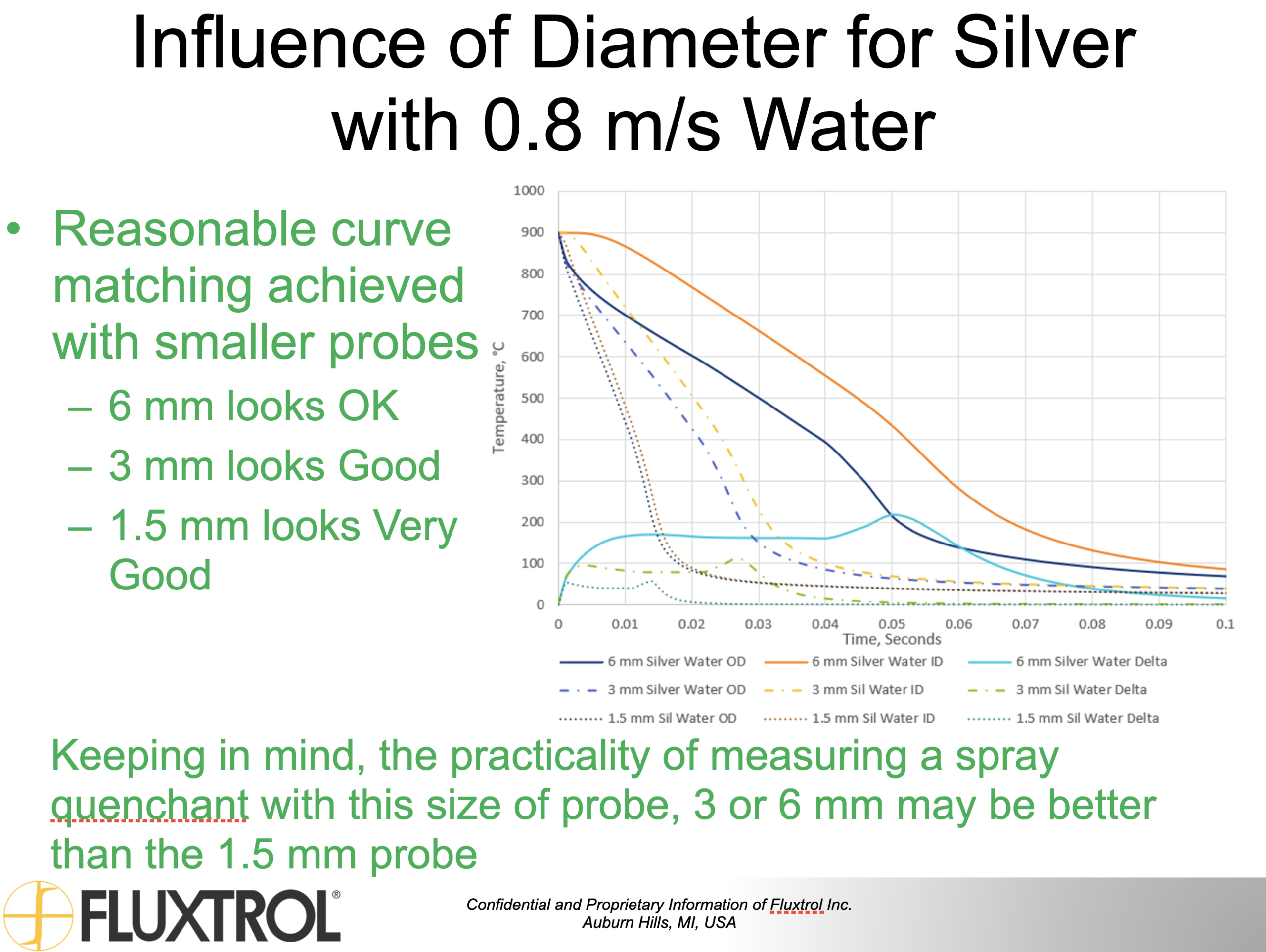
Influence of Diameter for Silver with 0.8 m/s Water
- Reasonable curve matching achieved with smaller probes
- 6 mm looks OK
- 3 mm looks Good
- 1.5 mm looks Very Good
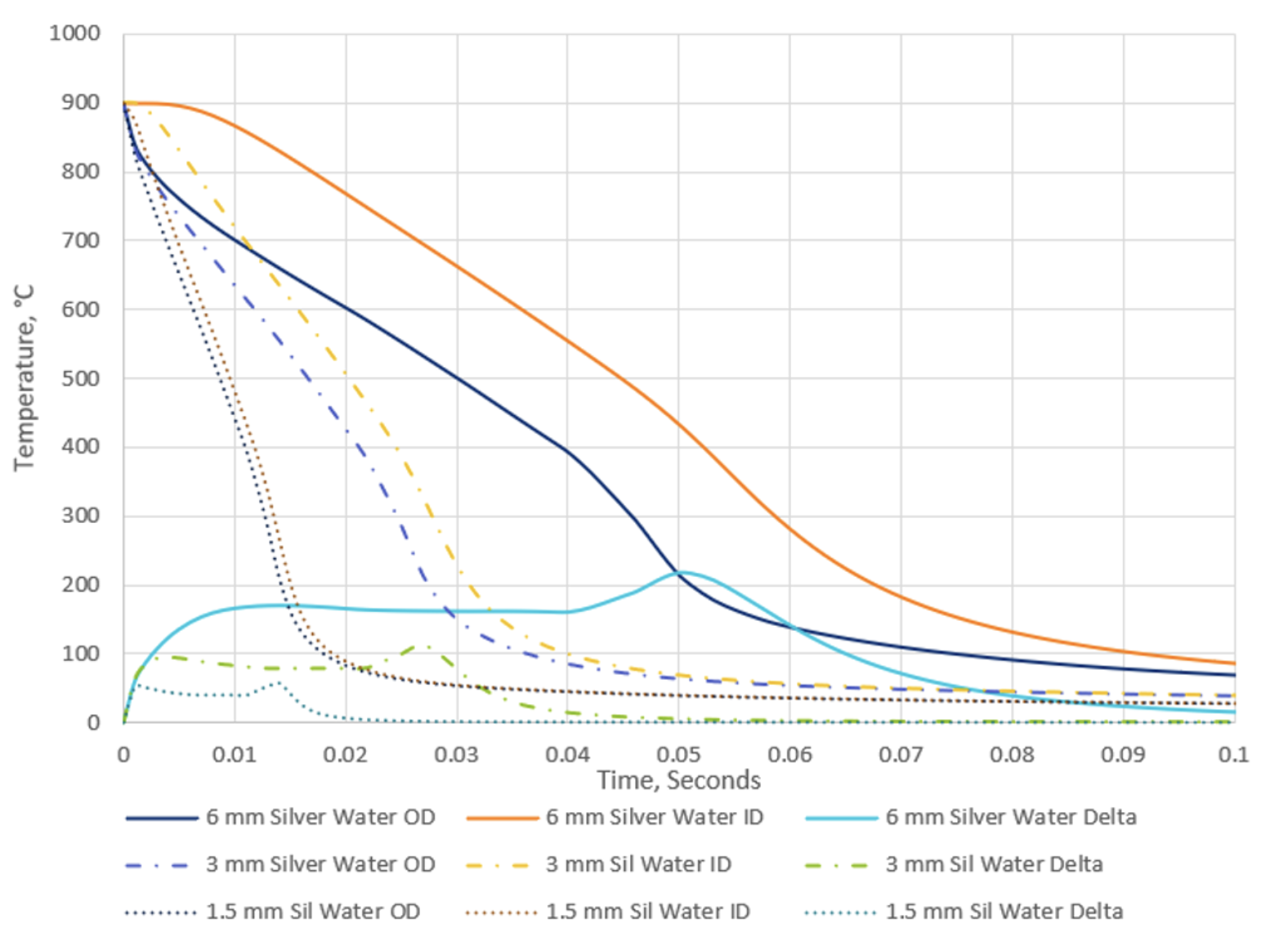
Keeping in mind, the practicality of measuring a spray quenchant with this size of probe, 3 or 6 mm may be better than the 1.5 mm probe
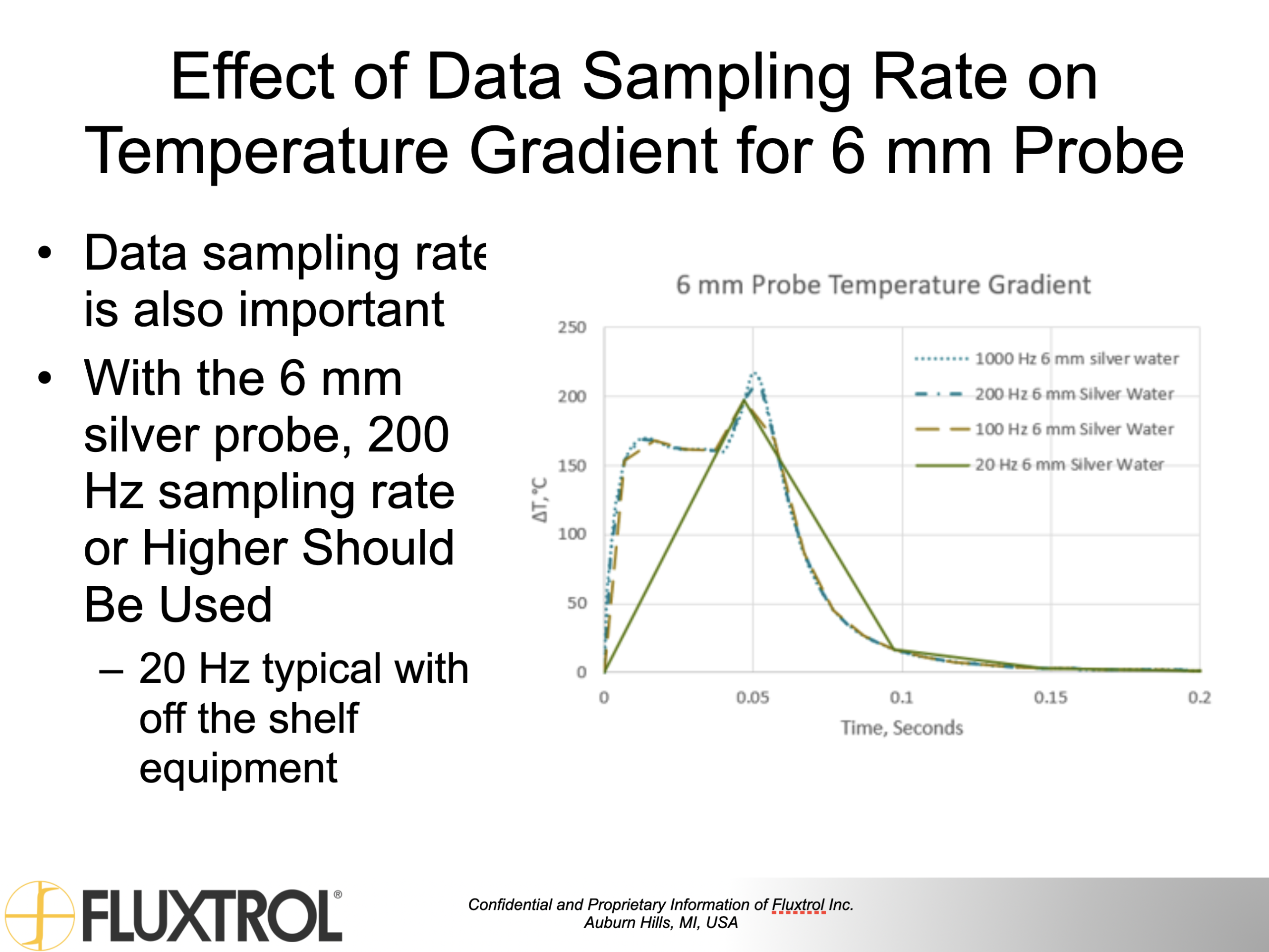
Effect of Data Sampling Rate on Temperature Gradient for 6 mm Probe
- Data sampling rate is also important
- With the 6 mm silver probe, 200 Hz sampling rate or Higher Should Be Used
- 20 Hz typical with off the shelf equipment
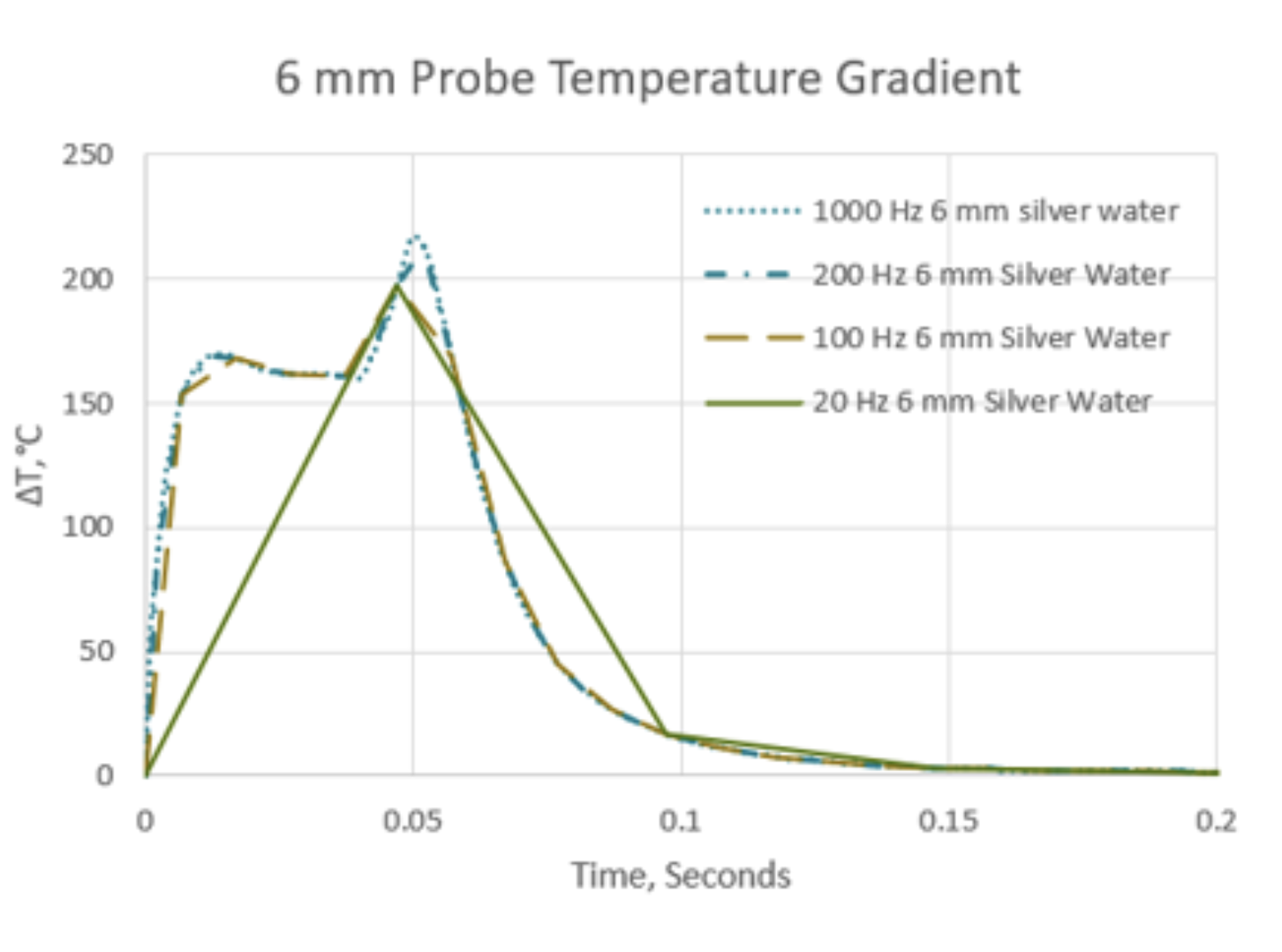
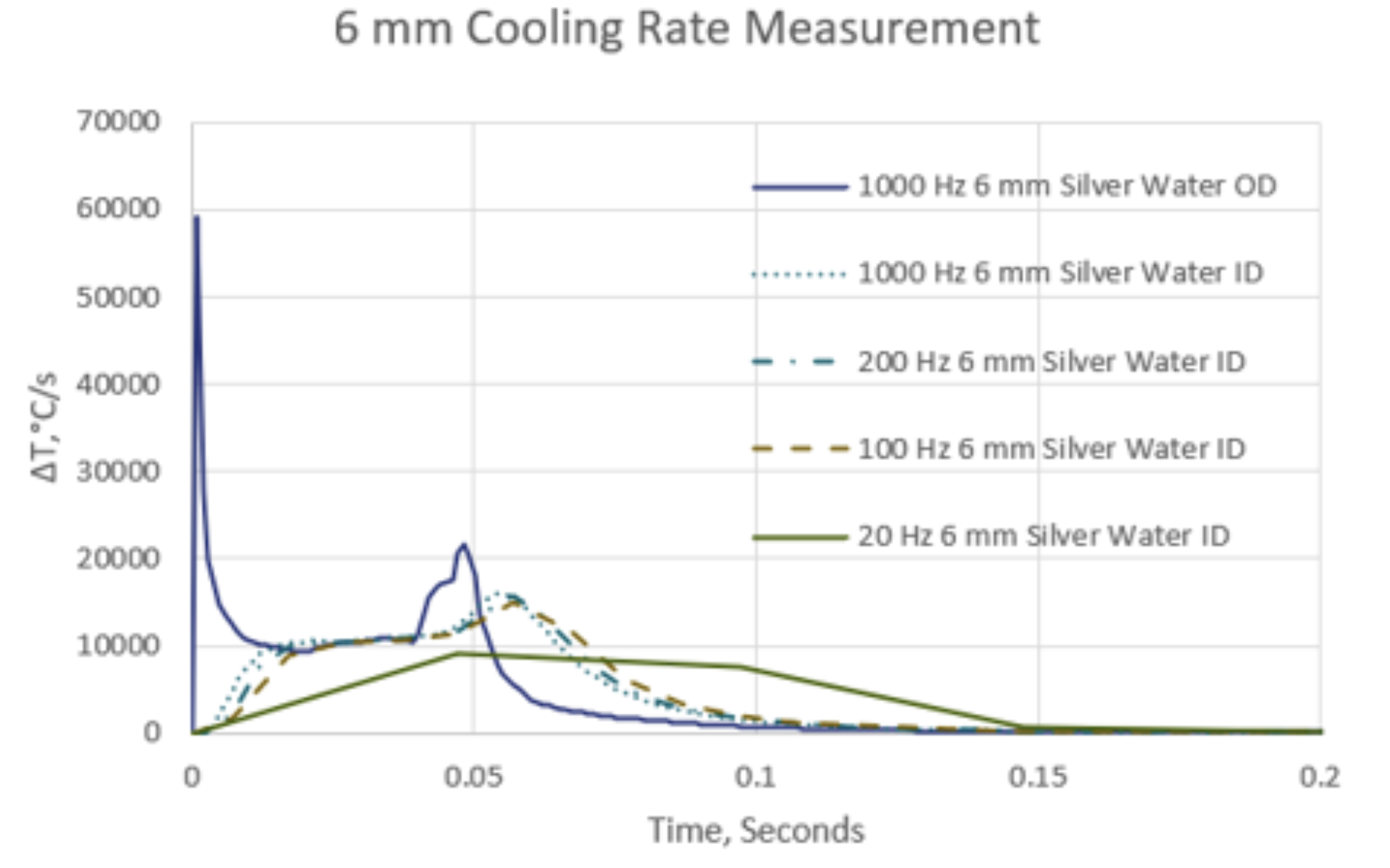
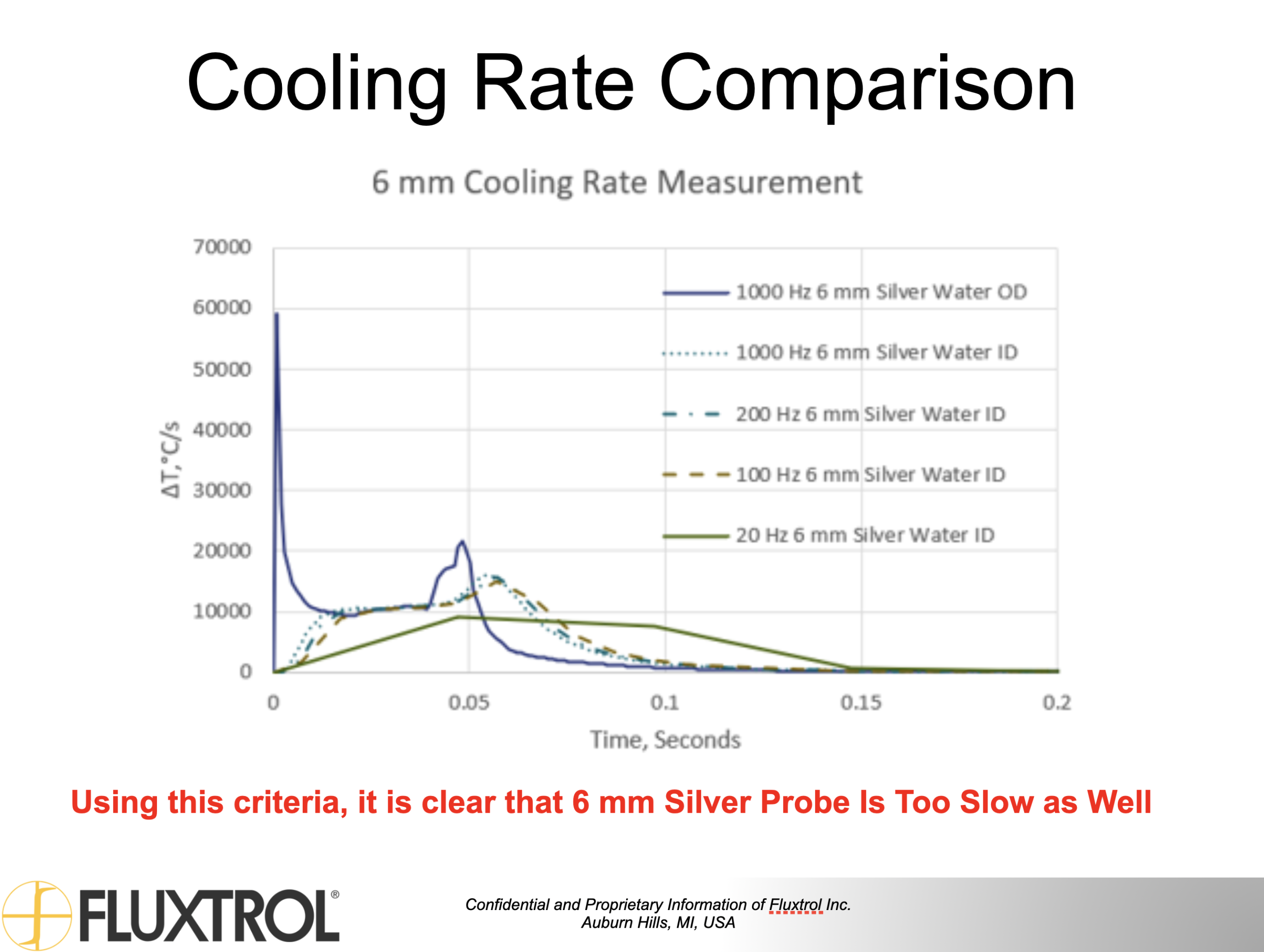
Using this criteria, it is clear that 6 mm Silver Probe Is Too Slow as Well
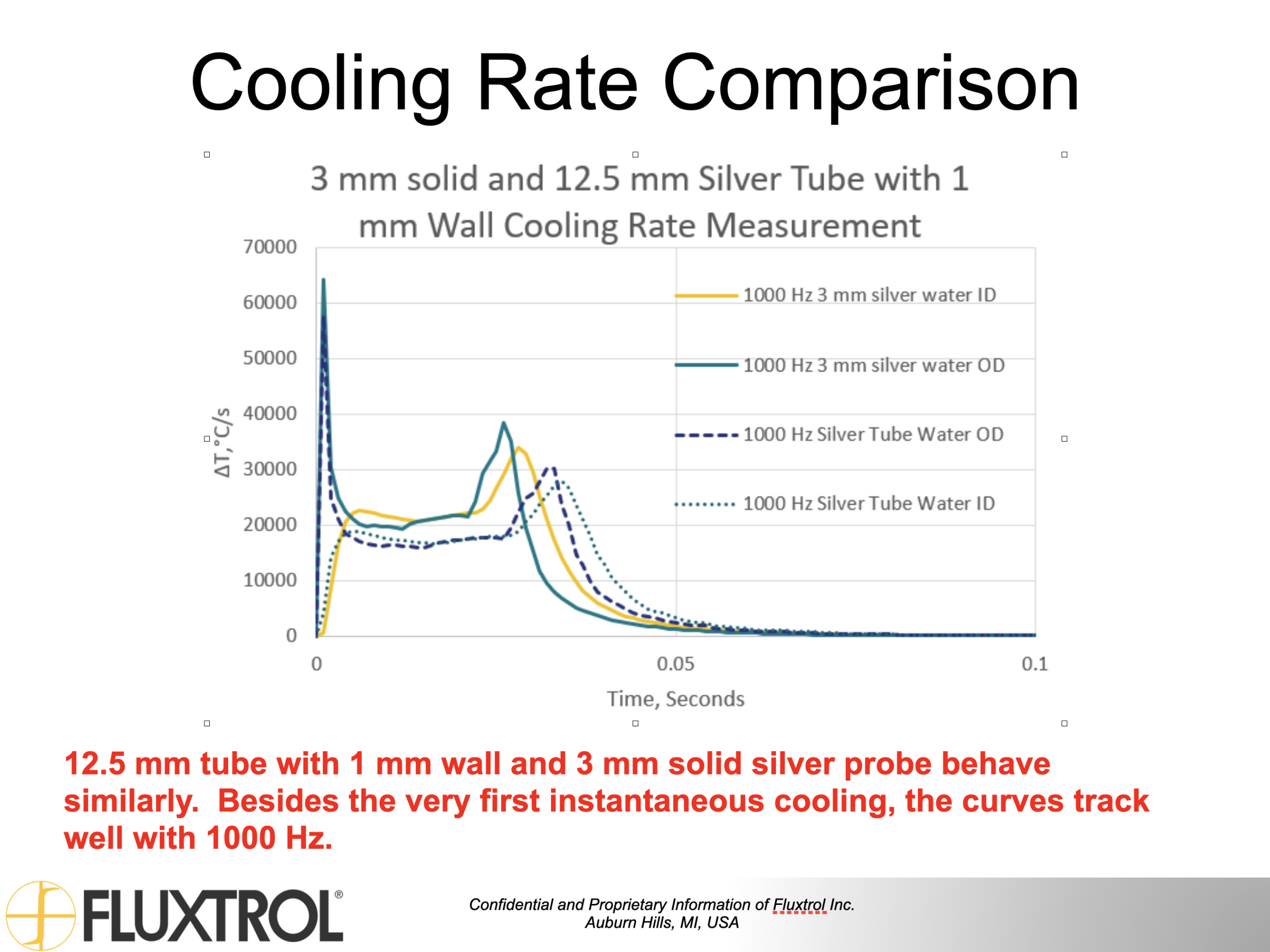
Cooling Rate Comparison

12.5 mm tube with 1 mm wall and 3 mm solid silver probe behave similarly. Besides the very first instantaneous cooling, the curves track well with 1000 Hz.
Summary
- Spray Quenchants Are Commonly Used in Induction Heat Treating Applications and Are Much Faster Than Immersion Quenchants
- There Is a Need for Improved Methods for Measurement and Characterization of Spray Quenchants for Induction Heat Treating
- A Virtual Study Was Performed Showing that Standard Quench Probes Were too Slow for Accurate Characterization of Faster Water Spray Quenchants
- Small Diameter Silver Probes Show Promise, but Consideration Needs to Be Made for the Practicality of Their Design
- Medium Diameter Silver Tube Probes Are More Promising
If you have more questions, require service or just need general information, we are here to help.
Our knowledgeable Customer Service team is available during business hours to answer your questions in regard to Fluxtrol product, pricing, ordering and other information. If you have technical questions about induction heating, material properties, our engineering and educational services, please contact our experts by phone, e-mail or mail.
Fluxtrol Inc.
1388 Atlantic Boulevard,
Auburn Hills, MI 48326
Telephone: +1-800-224-5522
Outside USA: 1-248-393-2000
FAX: +1-248-393-0277