Toll Free












Authors: Alec Williamson, Samuel Findley, Dominic Piccone, Colton Brown, Sam Nikolai, David Ulrich, Garrison Hommer, Rob Goldstein, Matthew McCosby, David Barbier, Laurent Lesne, Eliseo Hernandez, Malavikha Rajivmoorthy, Emmanuel De Moor, Lawrence Cho
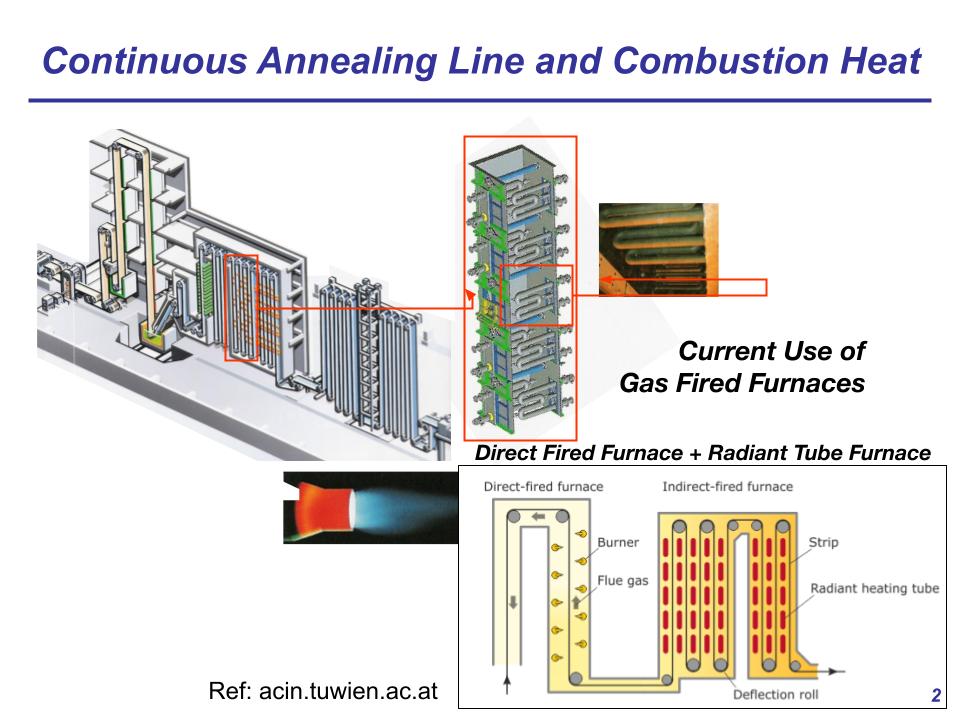
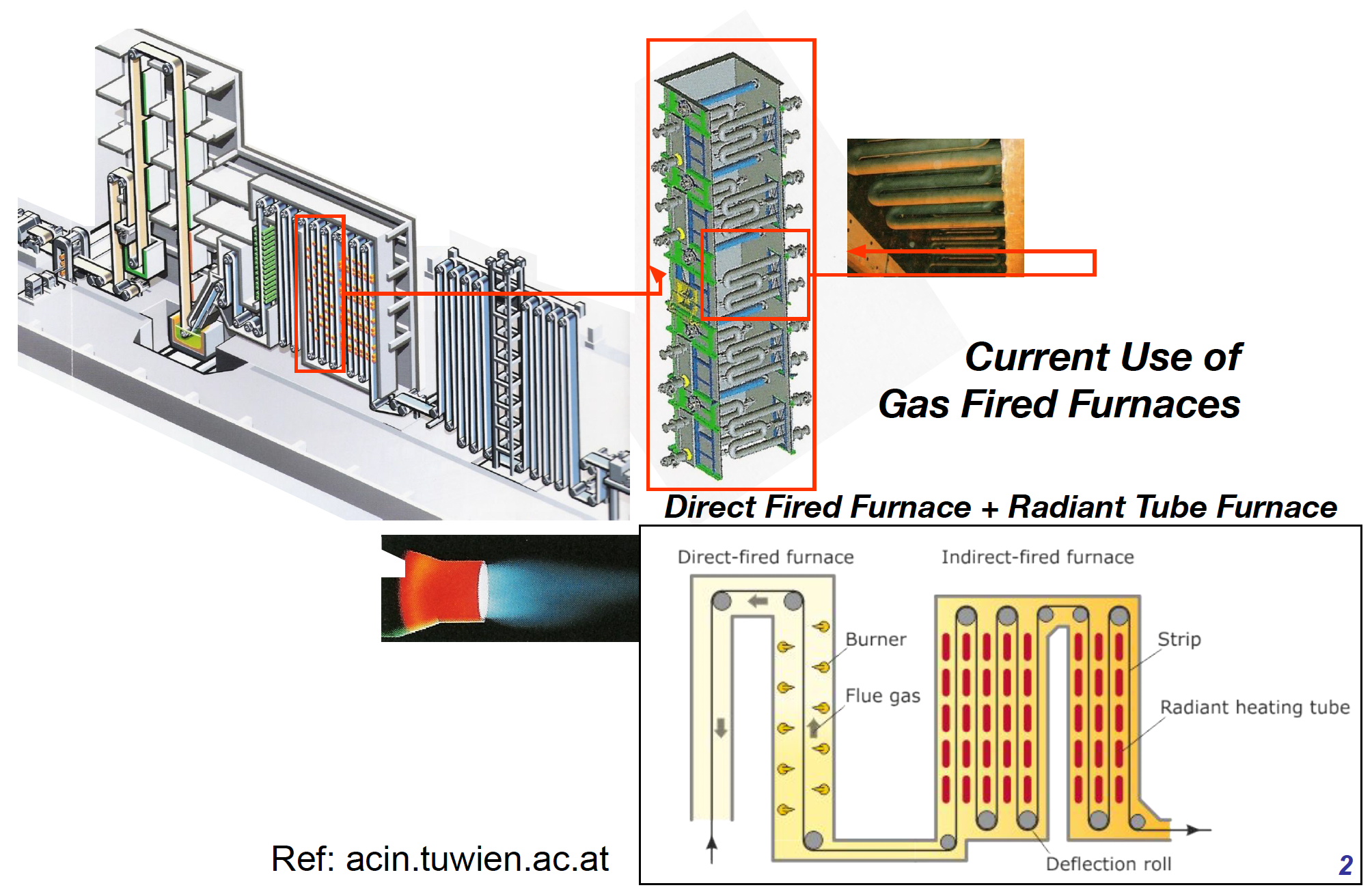
Continuous Annealing Line and Combustion Heat
ELTA Simulation: Energy Efficiency

- Efficiency loss near/above Curie temperature
- TFX can maintain high electrical efficiencies for thin strip heating.
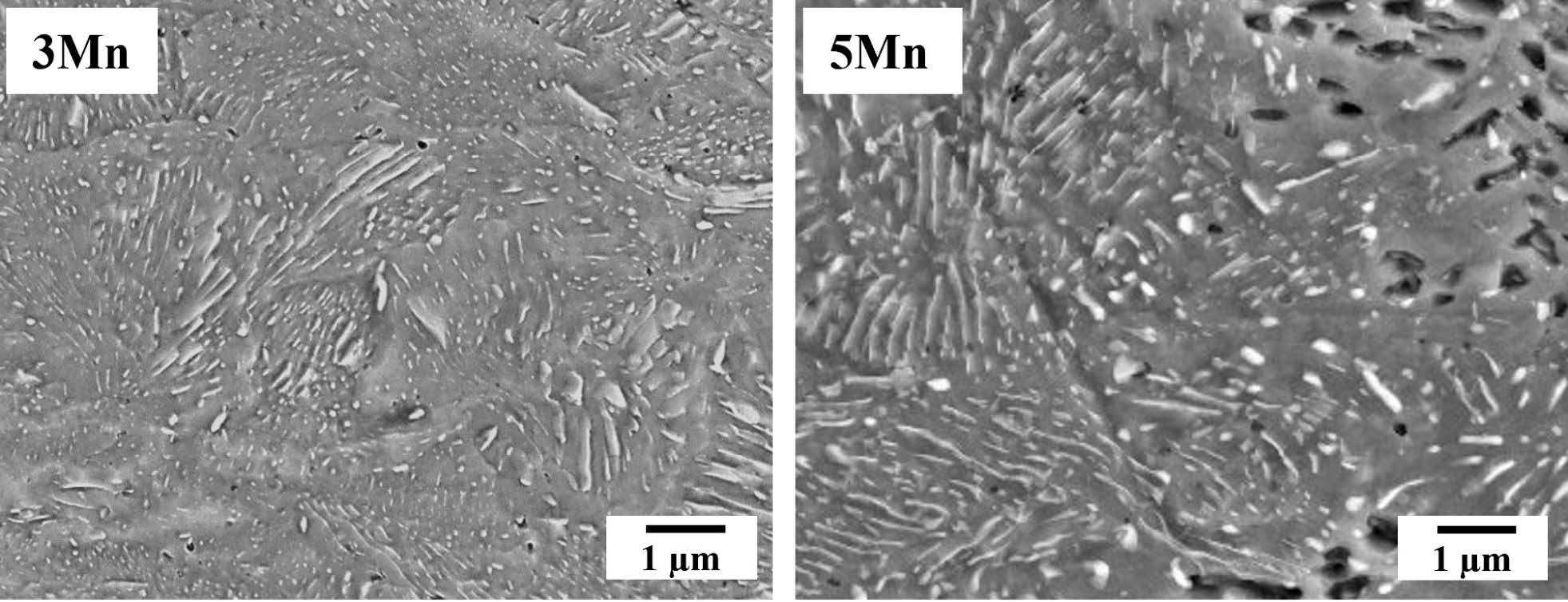
As-Received Microstructures
- Cold-rolled conditions consist of deformed pearlite/martensite and fine cementite.
- Two alloy compositions: Fe-0.3C-(3-5)Mn-1.6Si-1.0Cr
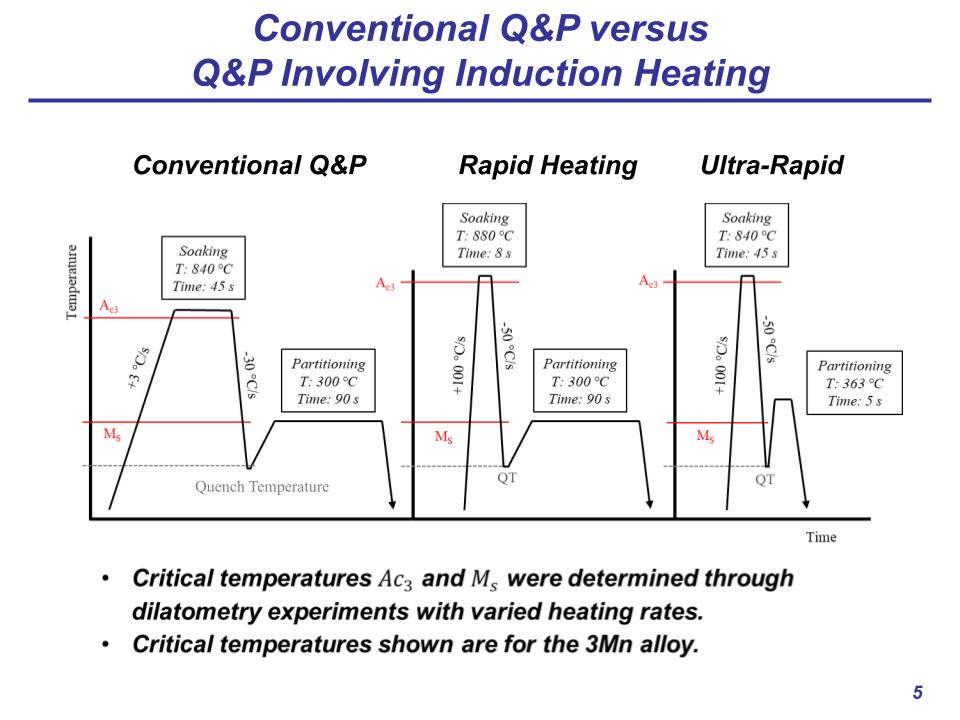
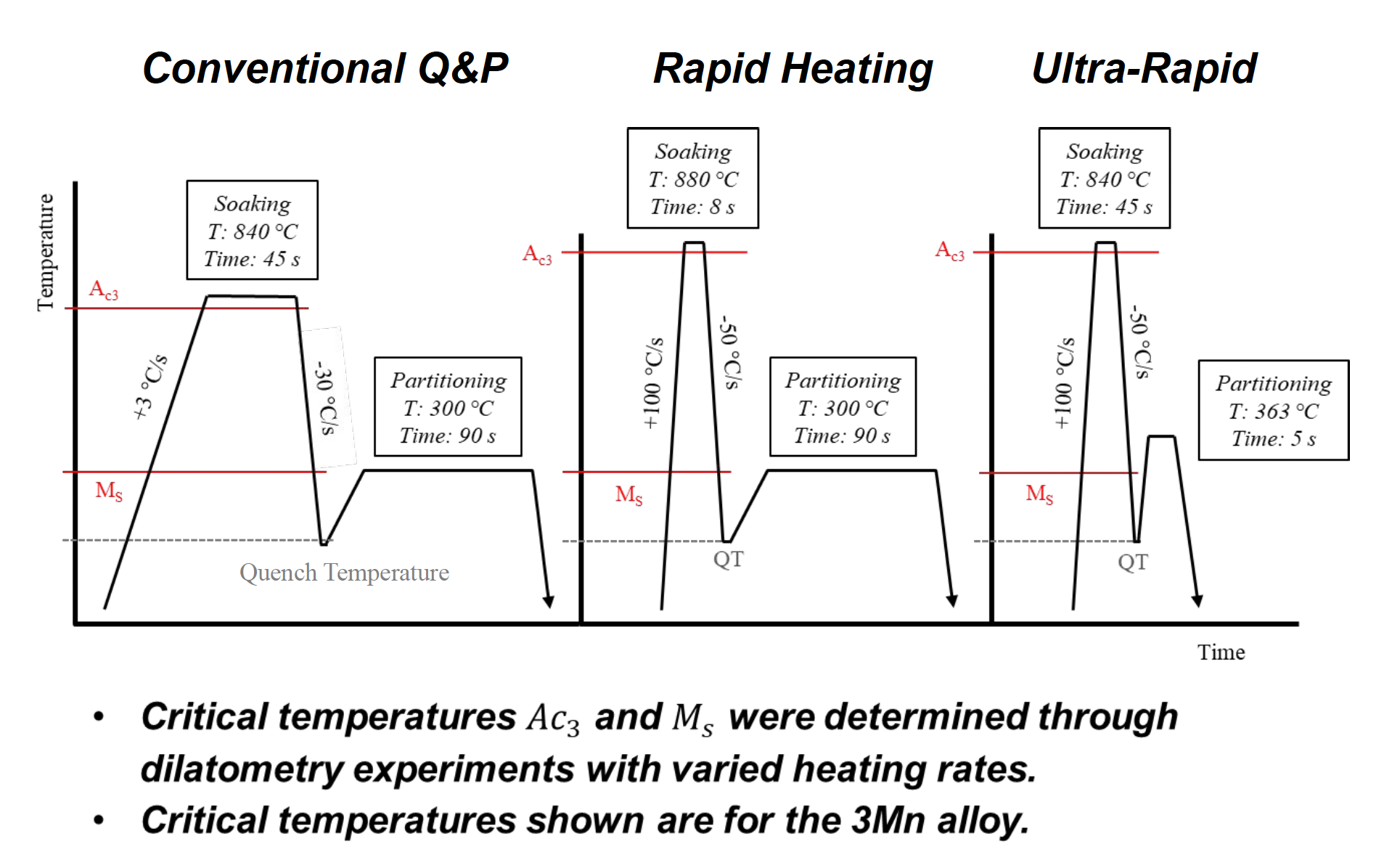
Conventional Q&P versus Q&P Involving Induction Heating
Prediction of Phase Fractions after Q&P
- Quench temperature (TQ); < TQ,max:
Retained austenite volume fraction increase with increasing TQ as less primary martensite is formed upon initial quenching - TQ >; TQ,max :
The austenite stability before final quenching decreases, resulting in a higher volume fraction of secondary martensite with increasing TQ.

Retained Austenite Fraction
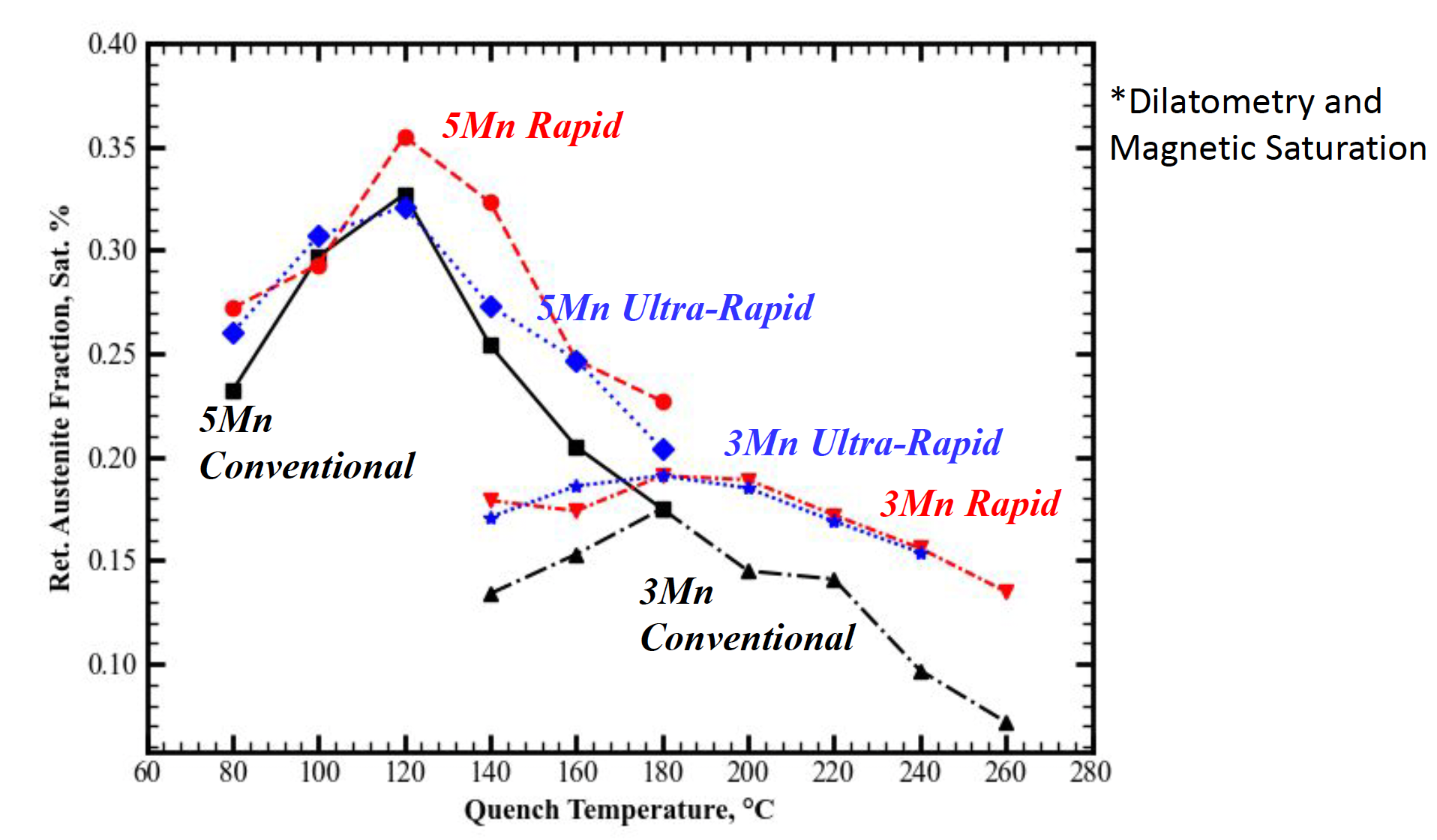
Higher Mn content and rapid heating result in increased retained austenite fractions.
Tensile Properties: Rapid vs. Conventional

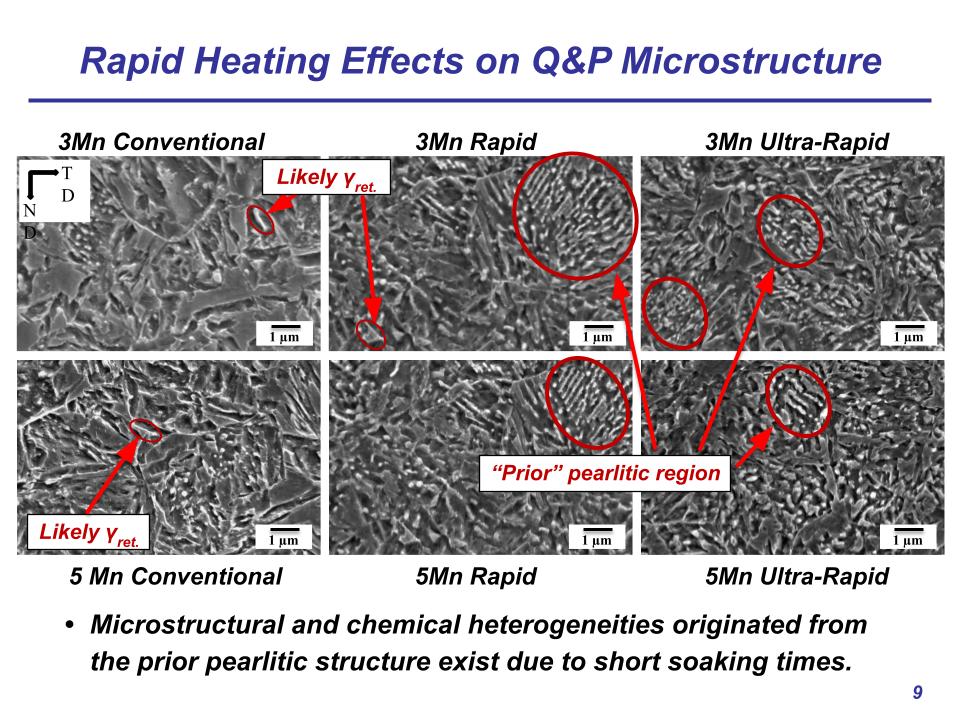
Rapid Heating Effects on Q&P Microstructure
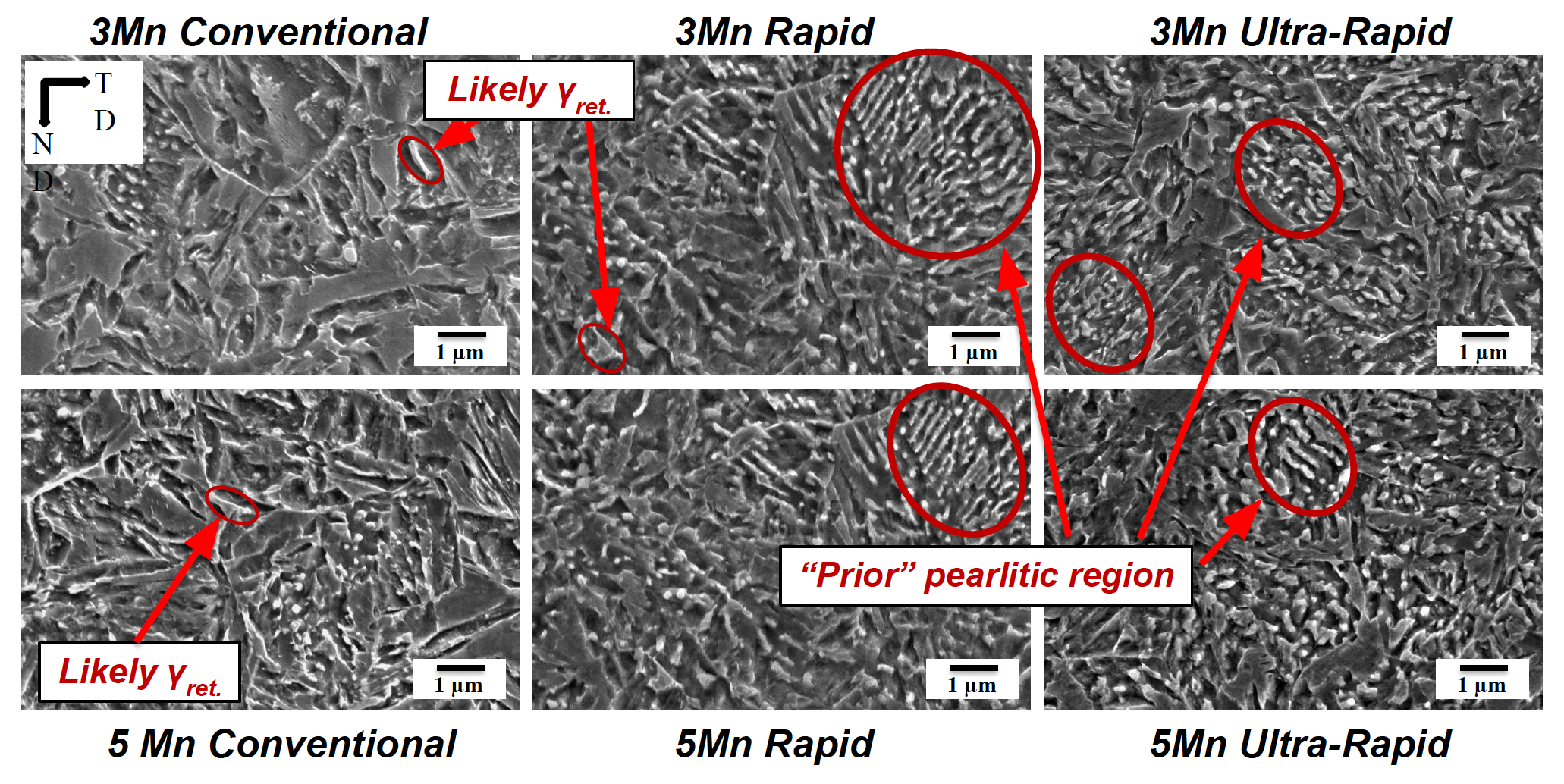
Microstructural and chemical heterogeneities originated from the prior pearlitic structure exist due to short soaking times.
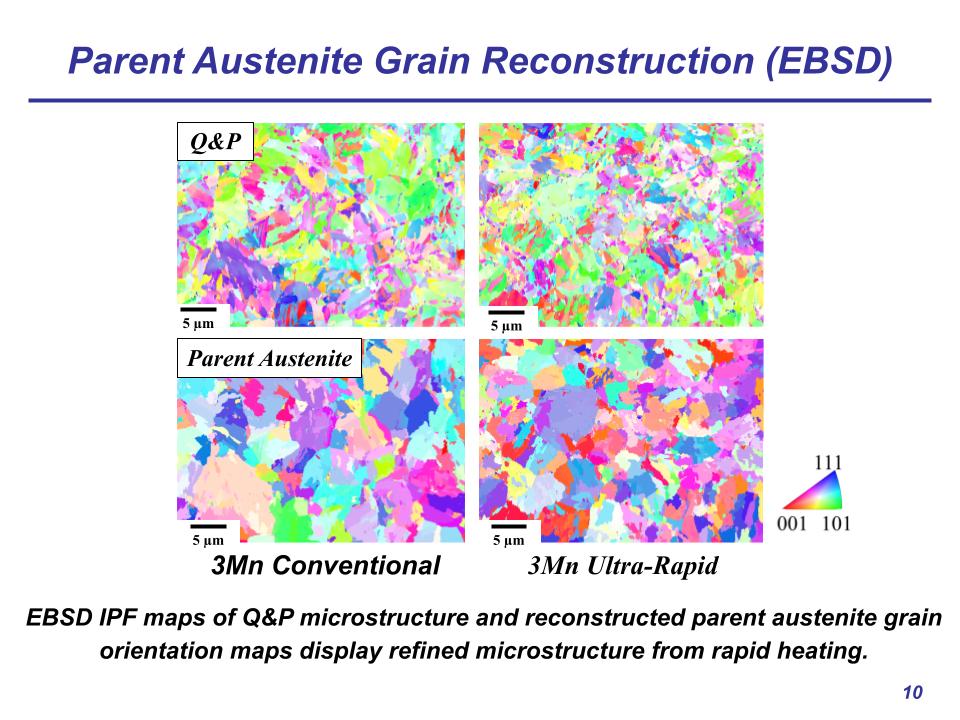
Parent Austenite Grain Reconstruction (EBSD)

EBSD IPF maps of Q&P microstructure and reconstructed parent austenite grain orientation maps display refined microstructure from rapid heating.
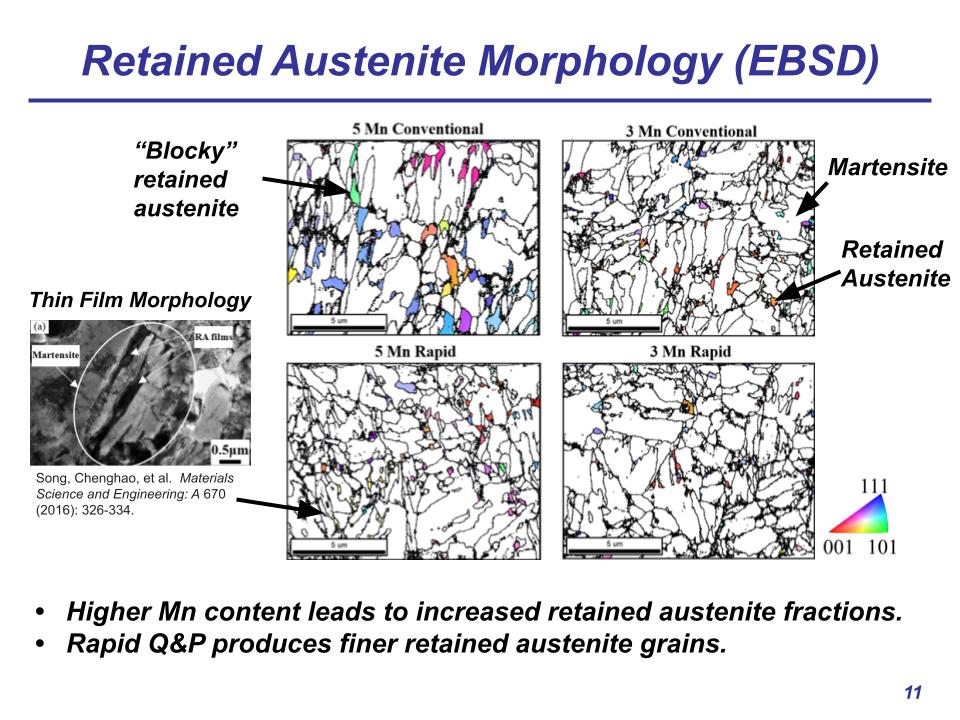
Retained Austenite Morphology (EBSD)

- Higher Mn content leads to increased retained austenite fractions.
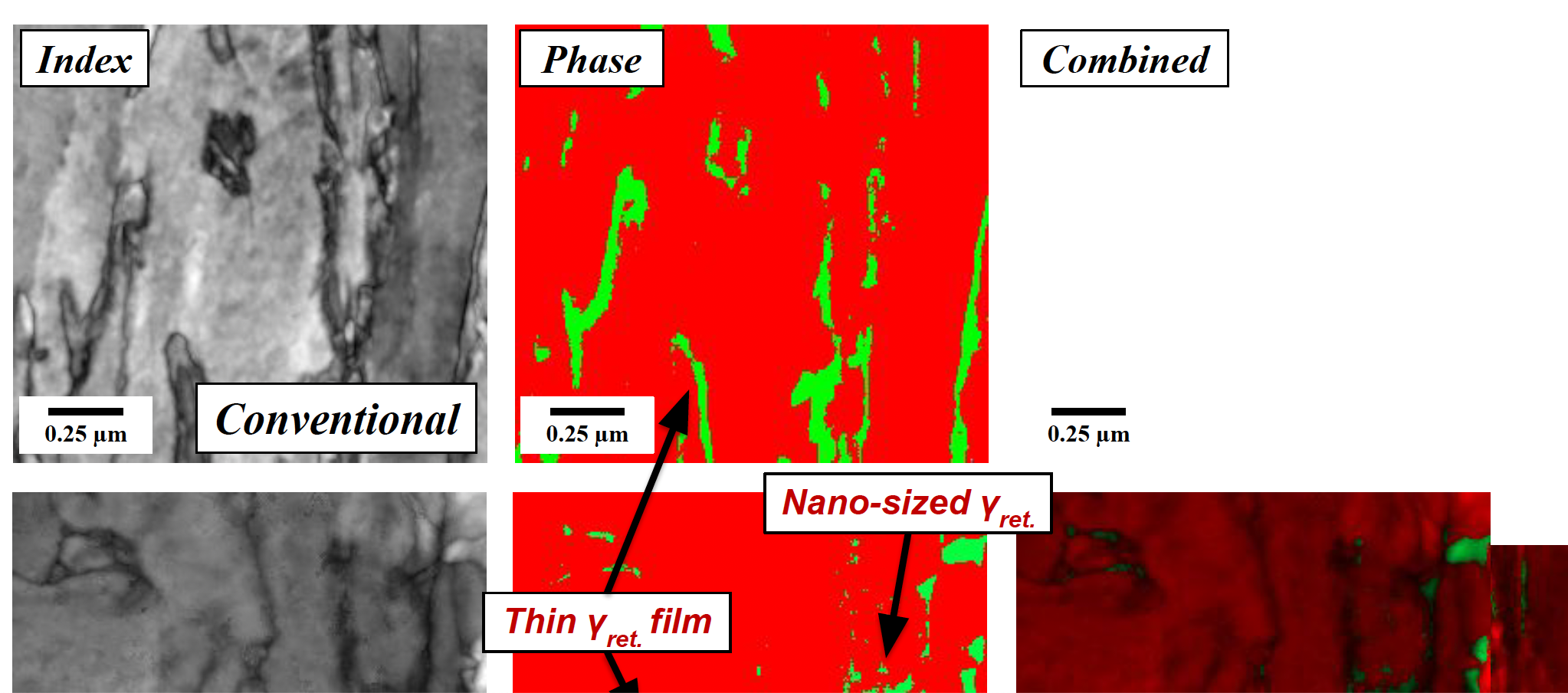
- Rapid Q&P produces finer retained austenite grains.
Crystallographic Orientation Mapping Using Precession TEM (ASTAR Technique)
Conclusions
- Induction heating represents a viable alternative to conventional gas-fired furnaces in AHSS continuous annealing.
- Q&P involving rapid induction heating stabilizes higher fractions of retained austenite compared to conventionally continuous-annealed microstructures.
- Rapid, higher-temperature partitioning stages can stabilize retained austenite fractions comparable to conventional partitioning treatments.
- Rapid heating produces refined, heterogeneous microstructures with finer retained austenite grains.
Acknowledgements
We gratefully acknowledge the support provided by the AIST Foundation, Fluxtrol, and the sponsors of the ASPPRC, including Fives, U. S. Steel, Cleveland-Cliffs, Baosteel, and POSCO.